How Much Do Ijen Miners Make: The Heartbreaking Financial Reality (2026 Update)
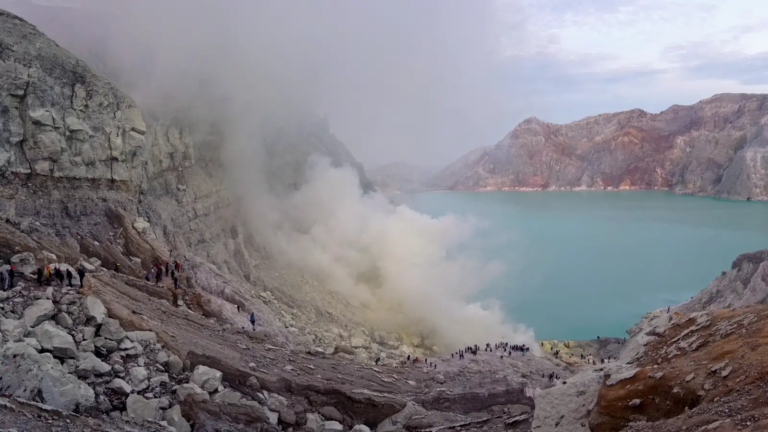
Standing on the rim of a volcanic crater at 2 AM is an ethereal experience that most travelers never forget. However, the shimmering electric-blue flames often mask a much harsher human reality occurring beneath the surface. For those planning a luxury or backpacking expedition to East Java, understanding the local economy is essential for ethical travel. Specifically, the question of how much these legendary “miners of the abyss” actually earn remains a point of deep curiosity and concern.
Ultimately, this guide serves to peel back the curtain on the sulfur mining industry. We will explore the rigorous physical demands, the precise kilogram rates, and the long-term health trade-offs. Therefore, you will gain a profound perspective that goes far beyond the typical Instagram aesthetic of the crater. This is the definitive financial breakdown of one of the world’s most dangerous professions.
What You Need to Know
💡 Earnings: Average daily pay ranges from $11 to $15 USD based on weight.
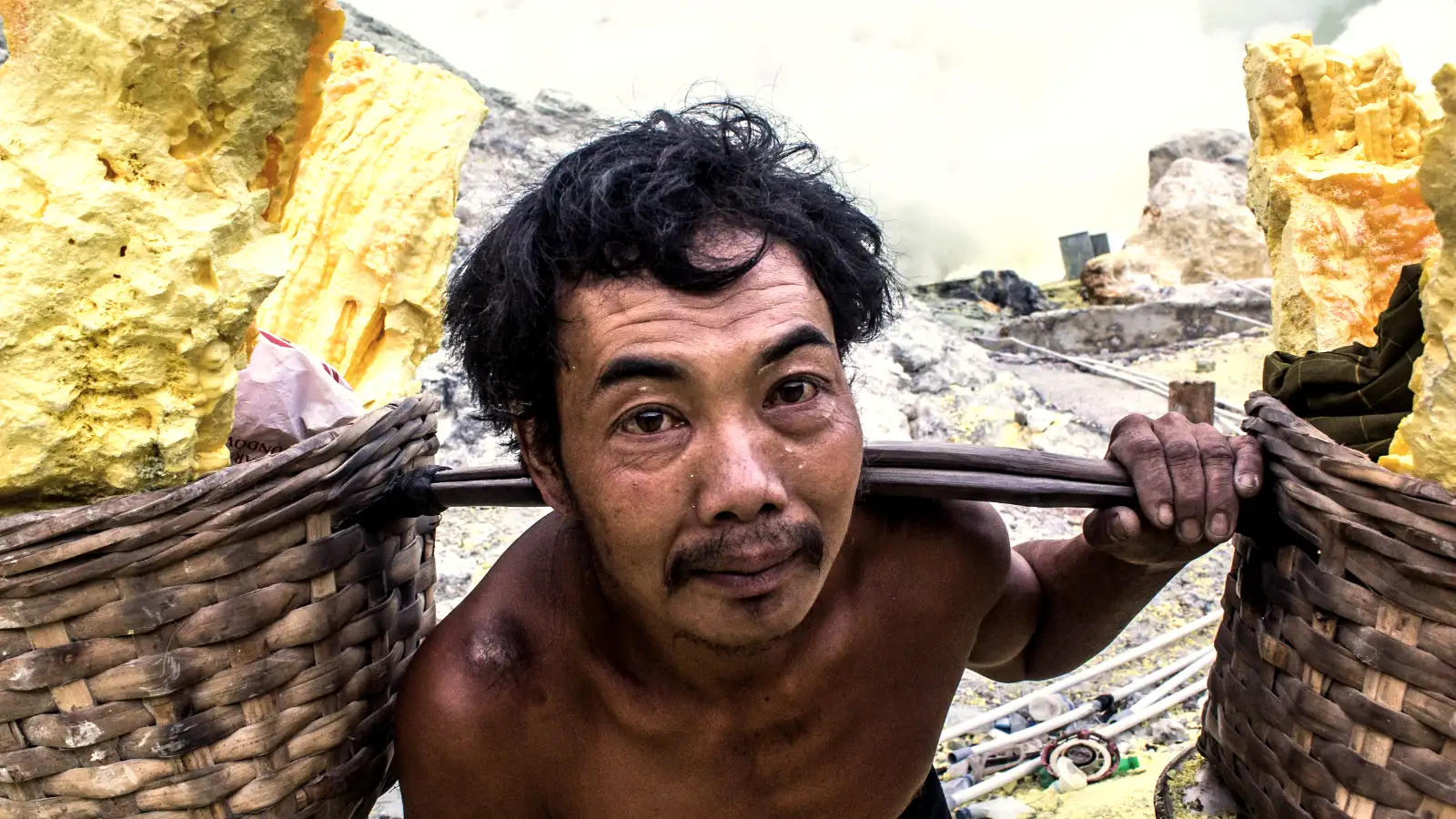
💡 Effort: Miners carry 70kg to 90kg of solid sulfur in bamboo baskets on their shoulders.
💡 Frequency: Most miners complete two full trips from the crater floor to the rim per day.
💡 Health: Constant exposure to sulfur dioxide gas significantly reduces life expectancy.
💡 Industry: The sulfur is primarily used for sugar refining and cosmetic production.
In This Guide
• Why Trust This Guide
• The Kilogram Math: Breaking Down the Pay
• The Physical Toll and Operational Hazards
• How Tourism Changes the Economic Equation
• How to Support Miners Ethically
• Frequently Asked Questions
Why Trust This Guide
For over a decade, our team has operated at the heart of the Ijen UNESCO Global Geopark. We don’t just observe from afar; we maintain daily relationships with the mining community and local cooperatives. Consequently, our data reflects real-time economic shifts and the authentic voices of the men who work the mountain.
Furthermore, we prioritize ethical sulfur miner interactions in every expedition we lead. We believe that transparency regarding wages is the first step toward responsible tourism. Therefore, this article combines first-hand interviews with current market rates to provide an unfiltered look at the volcanic economy.
The Kilogram Math: Breaking Down the Pay
To understand the income, one must first understand the “piece-rate” system used by the local mining company. Specifically, miners are paid purely based on the weight of the sulfur they successfully deliver to the weighing station. As of current standards, the rate sits between 1,250 and 1,500 Indonesian Rupiah (IDR) per kilogram.
Moreover, the logistics of the climb are staggering. A single load typically weighs between 70 and 90 kilograms, which is often more than the miner’s own body weight. For instance, a miner carrying 80kg at a rate of 1,300 IDR earns approximately 104,000 IDR for one grueling ascent and descent. Consequently, this equates to roughly $6.50 USD per load.
The Daily Tally
Most experienced miners aim to complete two trips per day. First, they begin their ascent in the dead of night, often around 1:00 AM, to beat the heat of the equatorial sun. Meanwhile, they navigate steep, rocky terrain with only a headlamp and sheer physical willpower. If they manage two full loads totaling 160kg, their daily take-home pay reaches about 208,000 IDR.
In addition, it is important to contextualize this within the regional economy of East Java. While $13 to $15 USD a day sounds low by Western standards, it is actually significantly higher than the local agricultural wage. However, this premium comes at a devastating cost to the individual’s physical longevity and respiratory health.
The Role of the Mining Cooperative
Strictly speaking, the miners operate as independent contractors under a central cooperative. This cooperative manages the transport of the sulfur from the base of the mountain to the factories in nearby towns. Consequently, the miners do not receive traditional employment benefits like health insurance or pension plans. They are paid for what they carry, and if they cannot carry, they do not earn.
🔥 Featured Expedition
Experience the majesty of the crater while supporting local communities through our ethically managed trekking programs. Our guides ensure your visit provides a positive impact on the very miners you meet along the trail.
The Physical Toll and Operational Hazards
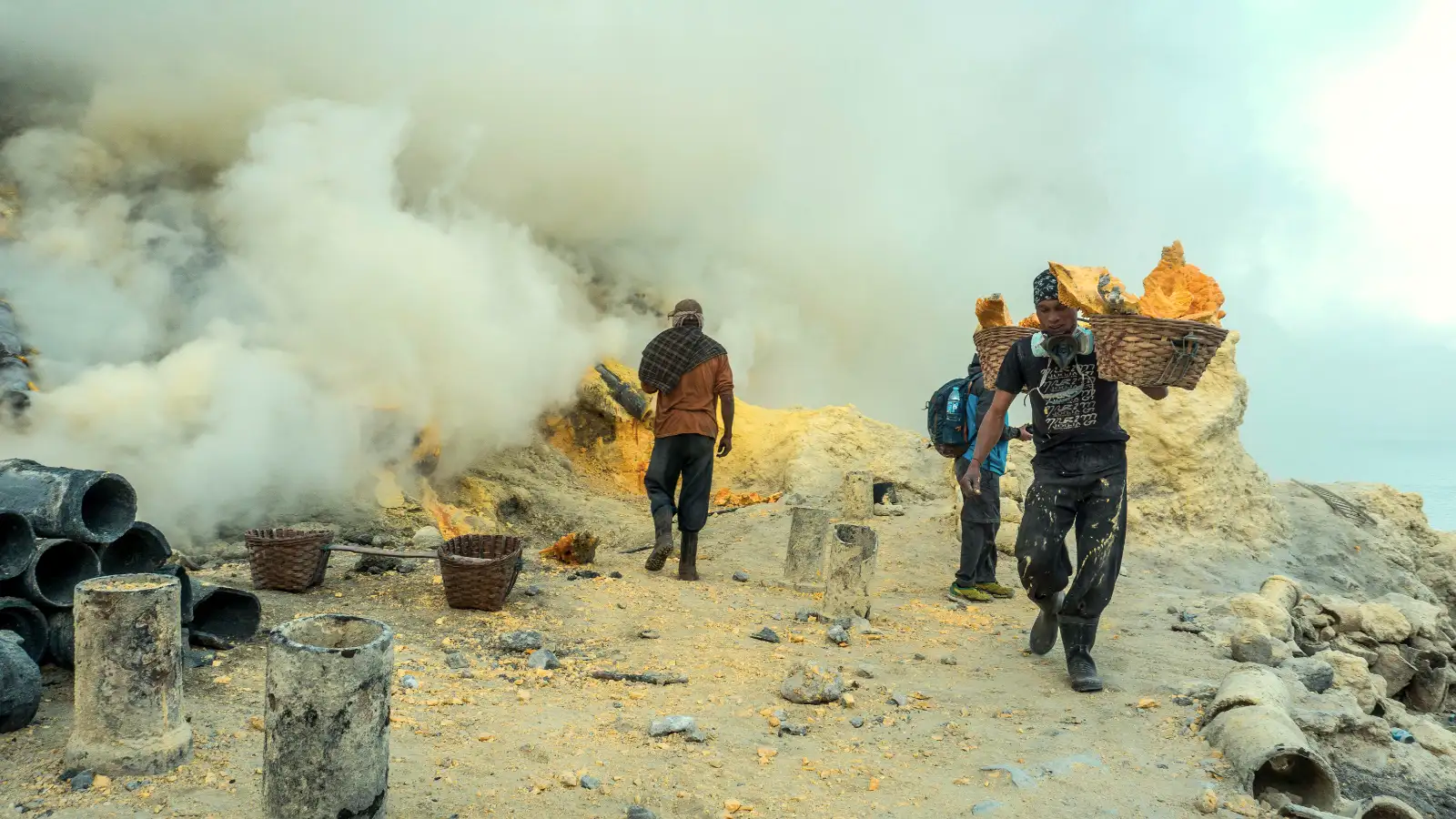
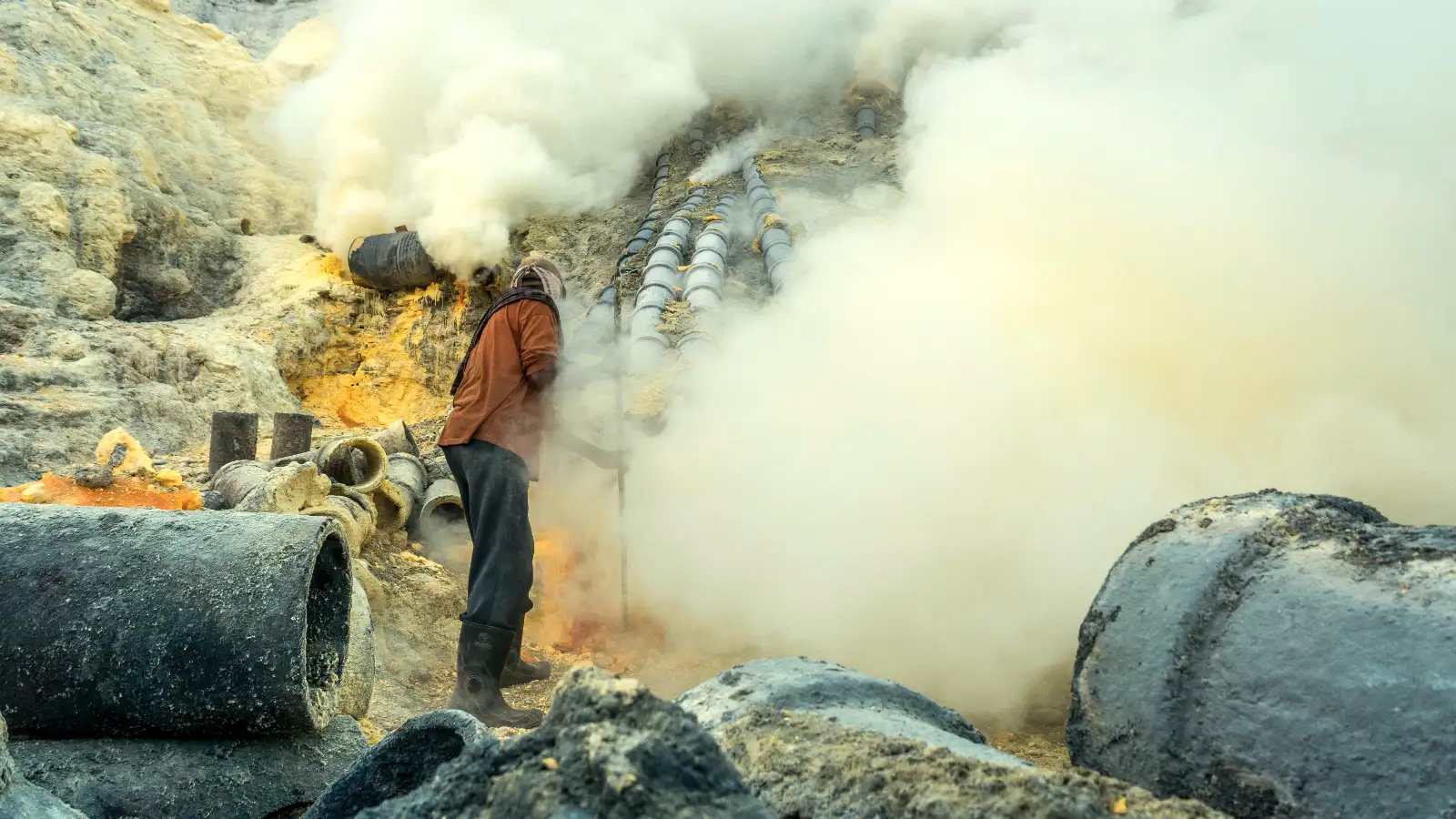
Working inside an active volcano is inherently dangerous. Specifically, the primary threat is the high concentration of sulfur dioxide (SO2) gas that billows from the vents. Furthermore, these toxic fumes can cause immediate respiratory distress and long-term lung damage if inhaled without professional-grade gas masks. Unfortunately, many miners still rely on simple damp cloths for protection.
Moreover, the physical strain on the musculoskeletal system is immense. The traditional bamboo yoke used to carry the sulfur creates massive callouses on the shoulders. Meanwhile, the constant pressure on the spine and knees leads to chronic joint issues early in life. Consequently, many miners are forced into “early retirement” by their late 40s due to physical exhaustion.
Environmental Hazards
In addition to gas, the terrain itself is a constant adversary. For instance, the path down to the crater floor is a narrow, winding trail of loose volcanic rock. During the rainy season, this path becomes slick and treacherous. A single misstep with an 80kg load can result in life-altering injuries or worse.
Furthermore, the acidic lake at the bottom of the crater adds another layer of danger. This lake is one of the most acidic bodies of water in the world, capable of dissolving metal. While miners don’t enter the water, the proximity to such a volatile environment requires constant vigilance. Therefore, the mental fatigue of the job is often as taxing as the physical labor.
How Tourism Changes the Economic Equation
Interestingly, the rise of international tourism has created a secondary income stream for many miners. For instance, many workers now supplement their mining income by acting as guides or “taxi” operators. Specifically, the Ijen trolley services have become a popular way for tourists to reach the rim without the hike.
Consequently, a miner can often earn more in one morning pulling a tourist up the hill than they can in two days of carrying sulfur. This shift is significant because it reduces their exposure to the toxic gas at the crater floor. Therefore, choosing to use these services or hiring a former miner as a guide directly improves their financial wellbeing.
Important Update: The appearance of the Blue Fire at Ijen Crater is highly unpredictable. It depends heavily on daily volcanic activity, gas density, and weather conditions. It is sometimes clearly visible, and sometimes not visible at all. To avoid disappointment, please contact us via WhatsApp to check the latest daily updates before you hike.
The “Blue Fire” Boom
The global fame of the blue fire has brought thousands of visitors to the crater every month. Moreover, this influx of capital has led to better infrastructure around the park. However, it also creates a stark contrast between the luxury travelers and the laborers. Specifically, the sight of a traveler with a $3,000 camera next to a man earning $13 a day is a powerful reminder of global inequality.
In addition, many miners have begun selling small sulfur carvings to tourists. These intricate shapes of turtles or flowers are hand-cast in the crater. While they only cost a few dollars, the profit margin for the miner is much higher than the raw sulfur price. For instance, selling five carvings can equal half a day’s mining labor.
How to Support Miners Ethically
As a visitor, you have the power to influence the local economy positively. First, always yield the right of way to miners on the trail. They are carrying immense weight and cannot easily stop or restart their momentum. Furthermore, consider purchasing a small sulfur carving even if you don’t intend to keep it; it is a direct tip to the worker.
Specifically, if you want to make a lasting impact, hire a guide through a reputable agency that treats locals fairly. For instance, our Ijen travel guide services ensure that a portion of every booking goes back into community support. Moreover, bringing extra high-quality respirators or warm clothing to donate can be life-changing for individual miners.
Photography Etiquette
Many travelers want to capture the “human element” of Ijen. However, please remember that these men are working an incredibly difficult job. Consequently, always ask for permission before taking a photo. In addition, it is customary to offer a small tip (IDR 20,000 to 50,000) if they agree to pose or chat with you. This respects their dignity and their time.
Continue Your Adventure
While the story of the Ijen miners is deeply moving, it is only one chapter of the East Java narrative. Therefore, we invite you to book your next tour with an agency that prioritizes human stories and ethical standards. You might consider pairing your volcano trek with a breathtaking Mount Bromo sunrise tour to see the diverse volcanic landscapes of Indonesia. Furthermore, for those seeking raw natural power, the Tumpak Sewu Waterfall expedition offers a stunning contrast to the sulfur mines. Ultimately, the best way to see the region is through our comprehensive Bromo and Ijen combination package, designed for travelers who want to see it all with a clear conscience.
Frequently Asked Questions (FAQ)
Q: Is it ethical to visit Ijen Crater and watch the miners?
A: Yes, provided you are respectful and your visit contributes to the local economy. Tourism has actually provided miners with safer alternative income sources like guiding and trolley services.
Q: Do Ijen miners have health insurance?
A: Generally, no. Most miners work as independent contractors for a cooperative and do not have access to formal healthcare benefits through their labor.
Q: How many years do miners typically work?
A: Due to the extreme physical strain and respiratory risks, many miners can only maintain this work for 10 to 20 years before their bodies are too damaged to continue.
Q: Can I donate gas masks to the miners?
A: Yes, high-quality masks and filters are highly appreciated. It is best to give them to the local mining office or directly to a miner you have established rapport with.
Q: What is the sulfur used for?
A: The high-purity sulfur from Ijen is used for industrial processes, primarily sugar bleaching (refining), vulcanizing rubber, and in some cosmetic and medicinal products.
Ready for an Ethical Adventure?
Don’t just be a spectator of the Ijen reality; be a part of a sustainable solution. By choosing a guided tour that respects the people and the environment, you ensure that the heartbeat of the volcano continues to thrive. Contact us today to customize your journey into the heart of East Java.