Hiking to Ijen Crater East Java, Indonesia: A Full Guide to Blue Fire and Acidic Lakes
Imagine standing on the edge of a massive volcanic caldera while the stars still hang heavy in the sky. Therefore, most adventurers find themselves breathless not just from the elevation, but from the surreal electric glow of the Blue Flame dancing below. This otherworldly spectacle makes the midnight ascent one of the most rewarding experiences in Southeast Asia.
However, planning a trip to this remote corner of Java involves more than just lace-up boots and a headlamp. Specifically, navigating the local permits, toxic sulfur clouds, and freezing temperatures requires a solid game plan. You need to check current availability for local guides before you arrive to ensure a smooth journey.
Because the terrain is rugged and the environment is volatile, being prepared is your best defense against disappointment. In addition, understanding the timing of the gas activity can be the difference between a clear view and a face full of smoke. This guide breaks down everything you need to conquer the Kawah Ijen slopes safely.
What You Need to Know
Status: Active Volcano with toxic sulfur gas emissions.
Difficulty: Moderate (steep 3km climb + rocky crater descent).
Permits: Must be purchased via the official e-booking system.
Highlights: Electric Blue Fire, world’s largest acidic crater lake, and sunrise viewpoints.
Pro Tip: Ensure you view our comprehensive package to skip the stress of self-booking transportation and permits.
In This Guide
• Why Trust This Guide?
• Getting to Ijen Crater
• The Hiking Route & Timeline
• Witnessing the Blue Fire
• Essential Safety & Gear
• Frequently Asked Questions
Why Trust This Guide?
Ultimately, our team has navigated the slopes of East Java for over a decade. Furthermore, we maintain direct daily communication with the local volcanic monitoring stations. This allows us to provide real-time updates that most generic travel sites simply cannot match.
For instance, we understand that Ijen is now recognized as part of the Ijen UNESCO Global Geopark. Consequently, this status has brought new conservation rules and stricter safety protocols for international visitors. We pride ourselves on translating these complex regulations into actionable advice for you.
Deep Local Expertise
Moreover, our guides are members of the local community who have spent their lives on these mountains. They know the wind patterns and where the toxic sulfur gas tends to pool. That level of Mount Ijen hike expertise ensures you stay safe while others are coughing in the fumes.
Meanwhile, we constantly update our data on road conditions and entrance fees. If a landslide blocks the path or a price changes, you will find it here first. Trusting our experience means you are investing in a safer, more immersive adventure.
How to Get to Ijen Crater
First, you must choose your base camp, which is typically the town of Banyuwangi. This gateway city is incredibly accessible via train from Surabaya or a short ferry ride from Bali. Additionally, many travelers arrive late at night and head directly to the Paltuding trailhead.
Moreover, some prefer starting from Bondowoso to the west. This route offers a different perspective of the lush Javanese countryside. Regardless of your choice, you will need a reliable driver to navigate the winding, pitch-black mountain roads at 1 AM.
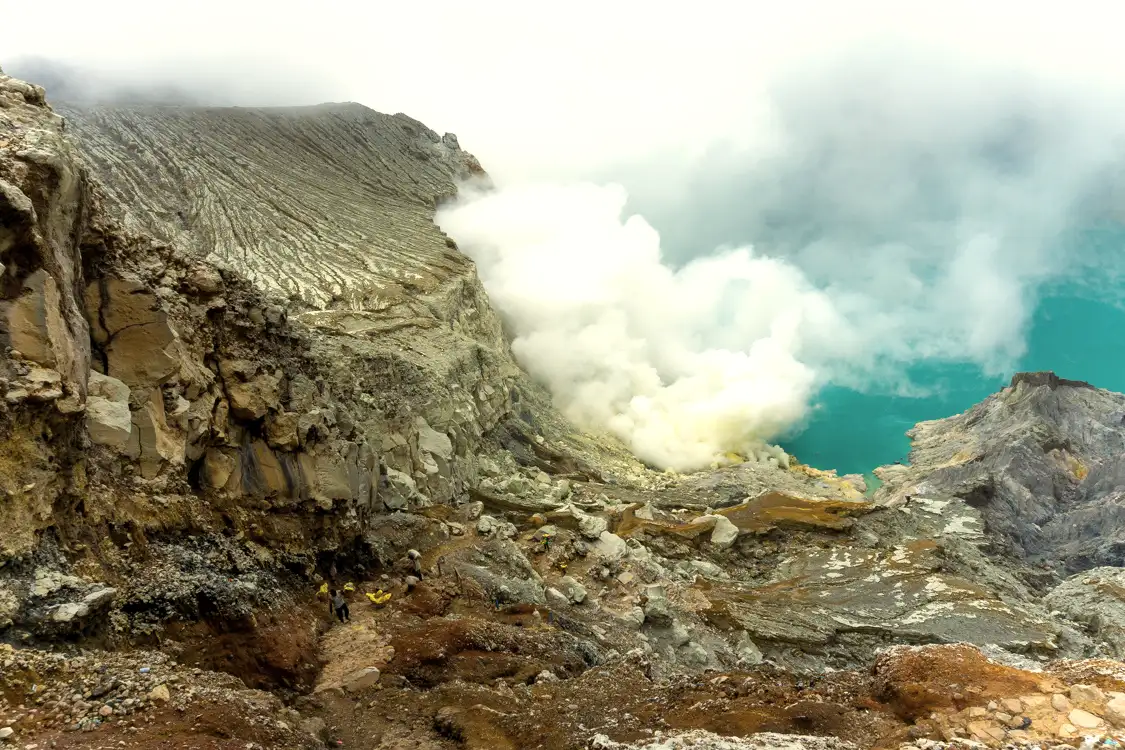
Transport from Bali
Initially, tourists often underestimate the distance from Bali. You have to drive three hours to Gilimanuk, take a ferry, and then drive another hour to the base. Consequently, booking a visit to Ijen from Bali is the most efficient way to handle the logistics.
Furthermore, private transport allows you to nap before the grueling climb begins. In contrast, trying to use local public transport at midnight is nearly impossible for solo travelers. Most reserve your local guide early to include a hotel pick-up service.
Logistics Comparison Table
| Starting Point | Travel Time | Best Mode of Transport | Difficulty Level |
|---|---|---|---|
| Banyuwangi | 1 Hour | Scooter / Private Car | Easy Logistics |
| Bondowoso | 2 Hours | Private Car | Moderate Logistics |
| Bali (Canggu/Ubud) | 5-7 Hours | Private Tour Van | Challenging Logistics |
🔥 Featured Expedition
Experience the ultimate sunrise adventure with our top-rated cross-island trek. We handle everything from the Bali ferry to your professional gas mask rental!
The Hiking Route & Timeline
Specifically, the trek starts at Paltuding, the official entrance located at 1,850 meters above sea level. The trail is roughly 3 kilometers long and features a consistently steep incline for the first two kilometers. Therefore, pacing yourself is essential to avoid burnout before reaching the rim.
In addition, the path is wide and well-maintained but can become dusty during the dry season. For instance, the second half of the climb flattens out, offering a much-needed reprieve for your legs. Eventually, you will smell the distinct “rotten egg” scent of sulfur as you approach the crater.
Timeline of a Midnight Hike
Usually, the gates at Paltuding open at 2:00 AM. Consequently, hikers start their ascent in total darkness, guided only by the bobbing lights of their headlamps. Most fit trekkers reach the crater rim within 60 to 90 minutes of steady walking.
Moreover, if you want to see the Blue Fire, you must descend 800 meters into the crater. This part of the journey is treacherous and requires careful foot placement on loose volcanic rock. It is highly recommended to see pricing details for tours that prioritize safety equipment like high-grade respirators.
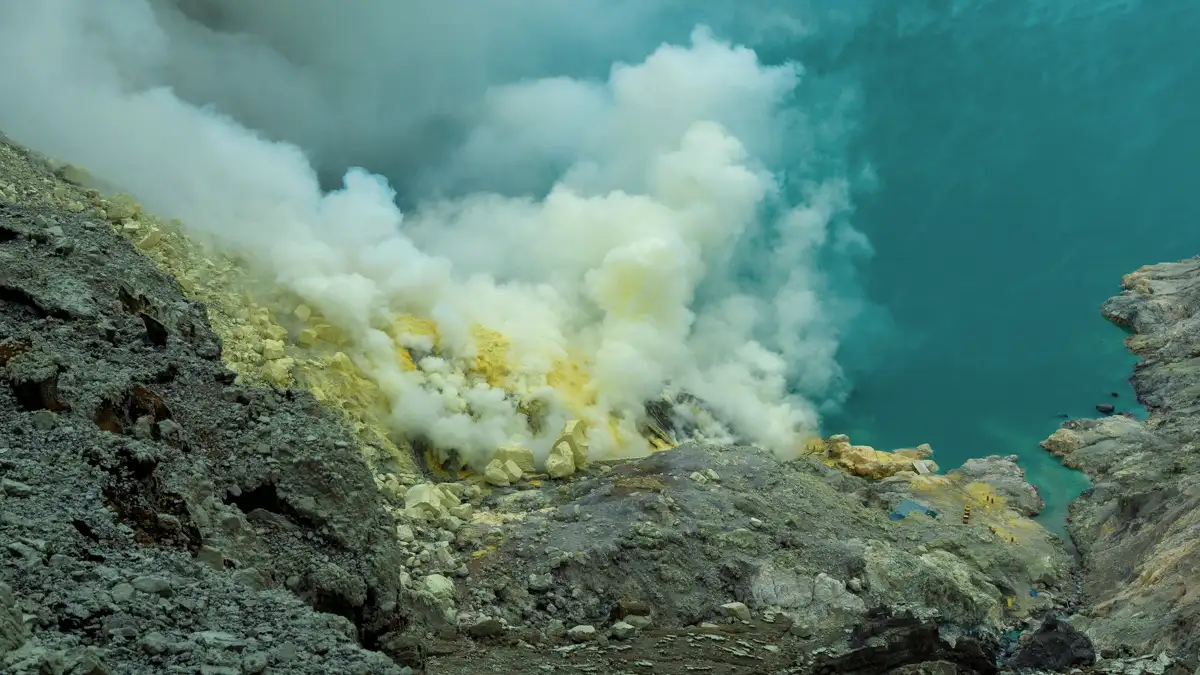
The Descent Into the Abyss
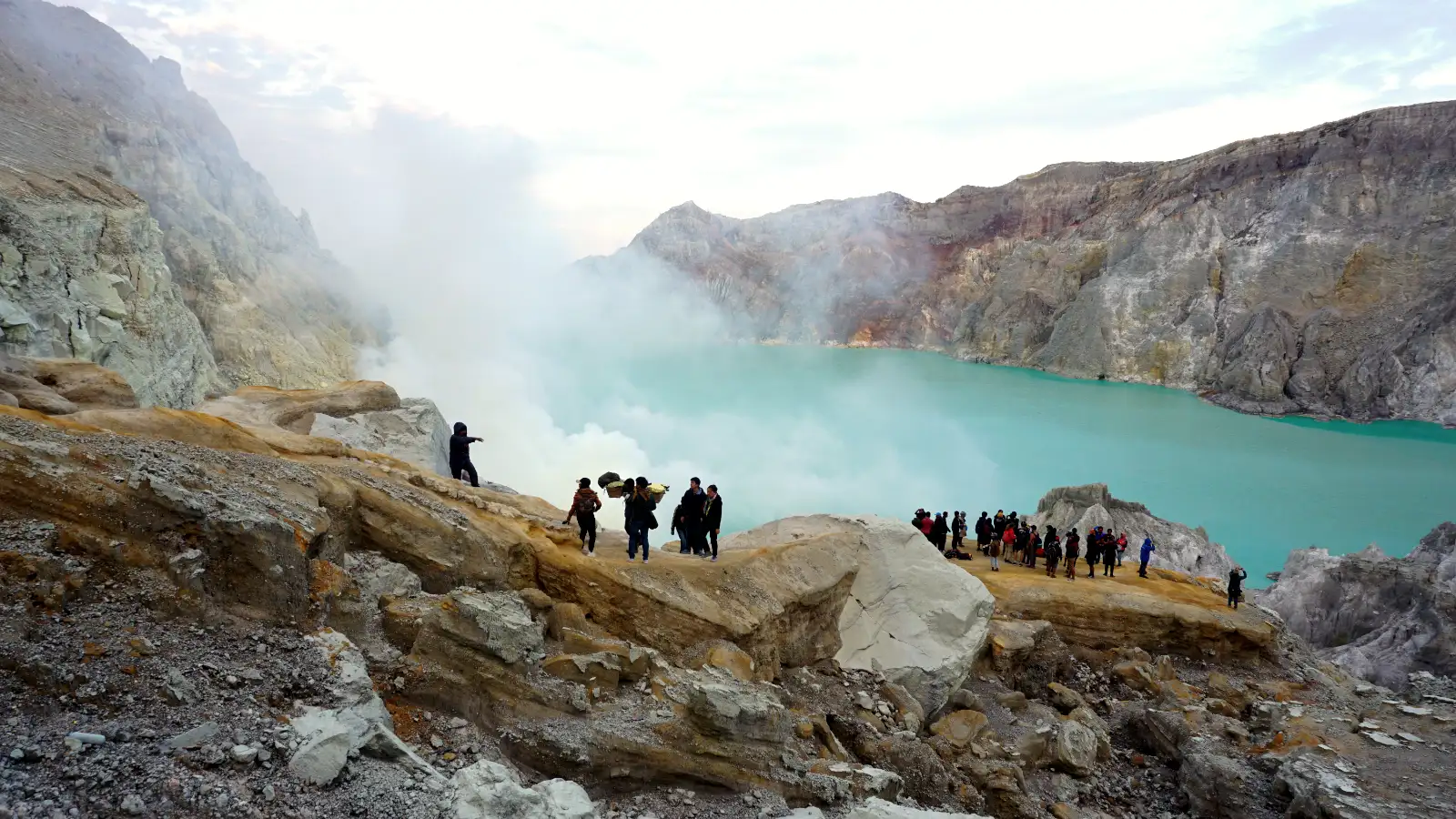
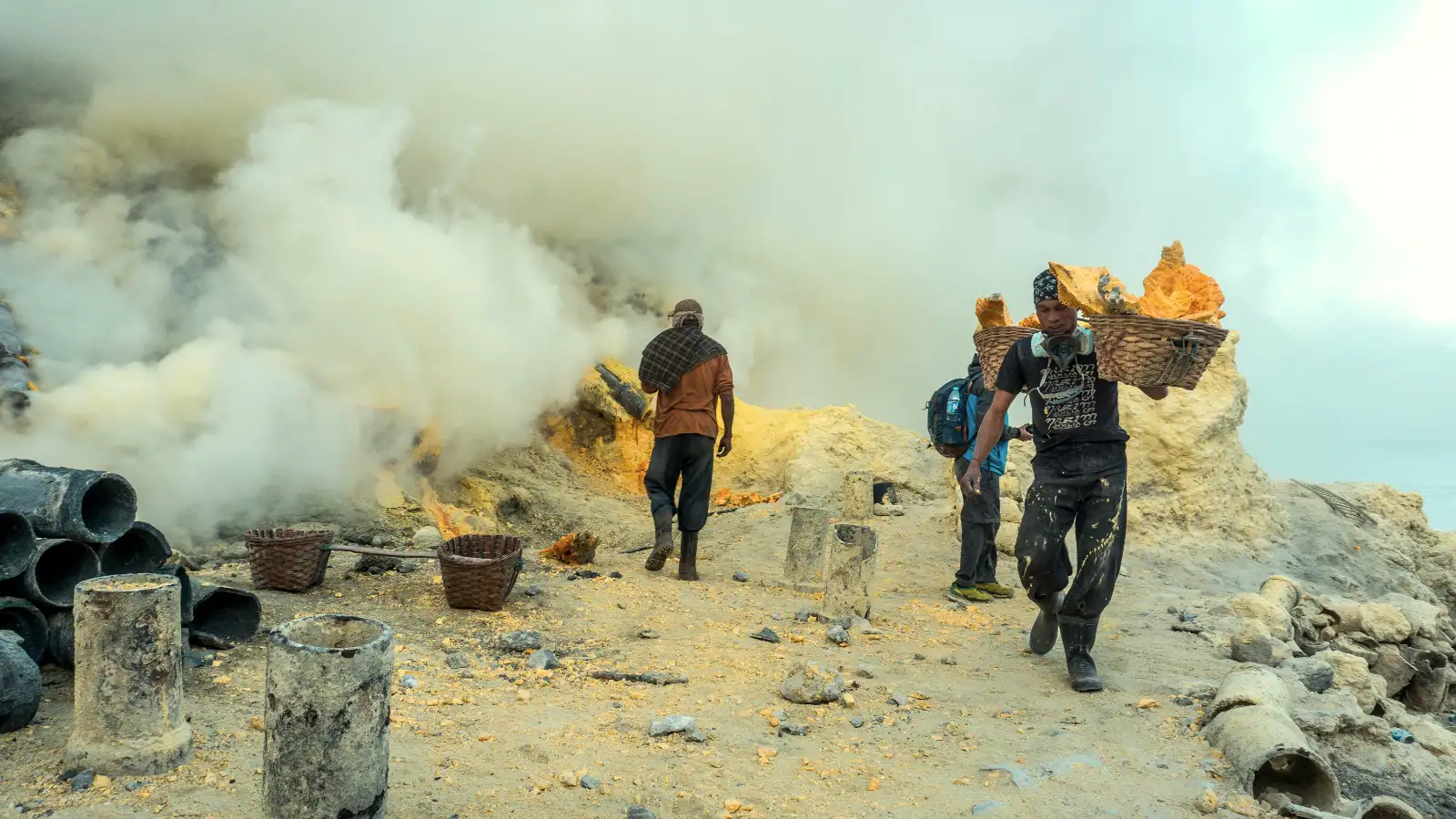
Actually, the descent to the lake shore is not for the faint of heart. You will share a narrow path with sulfur miners carrying loads of up to 90kg on their shoulders. Therefore, always yield the right of way to these incredibly hardworking men as they climb out.
Similarly, the smoke can shift instantly with the wind. Because of this, you must have your gas mask ready at all times. Learning about how much Ijen miners make provides a sobering perspective on the luxury of our travel experiences.
Witnessing the Blue Fire
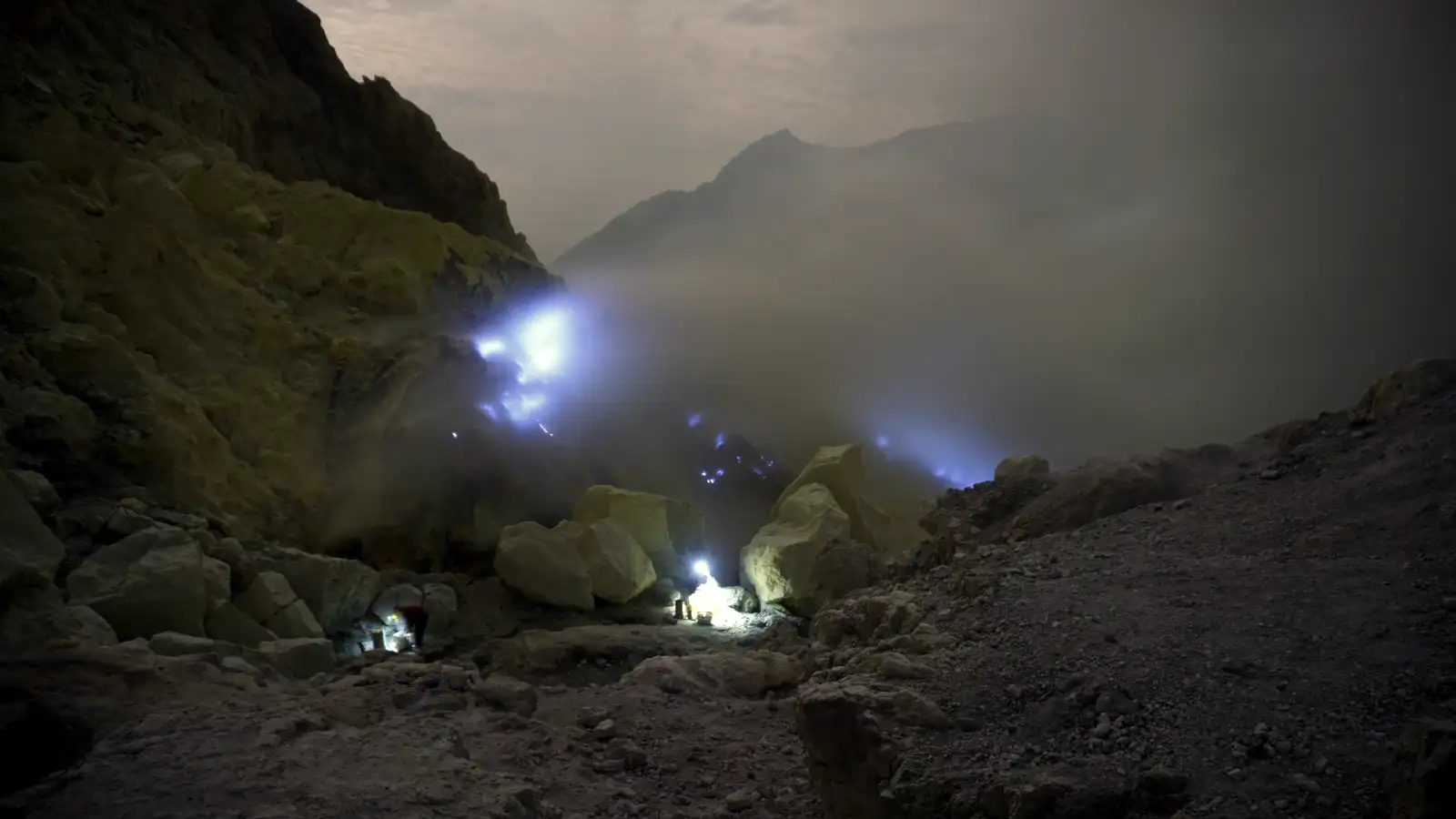
Essentially, the Blue Fire is a chemical reaction of sulfuric gases escaping from volcanic fissures at high pressure. When these gases contact the oxygen-rich air at temperatures above 360°C, they ignite into brilliant blue flames. Specifically, this phenomenon is only visible in the dark of night.
In addition, the intensity of the flame varies based on the gas concentration. Some nights, the flames can reach up to five meters in height. However, on other nights, they may be mere flickers or completely obscured by thick white smoke.
The Acidic Crater Lake
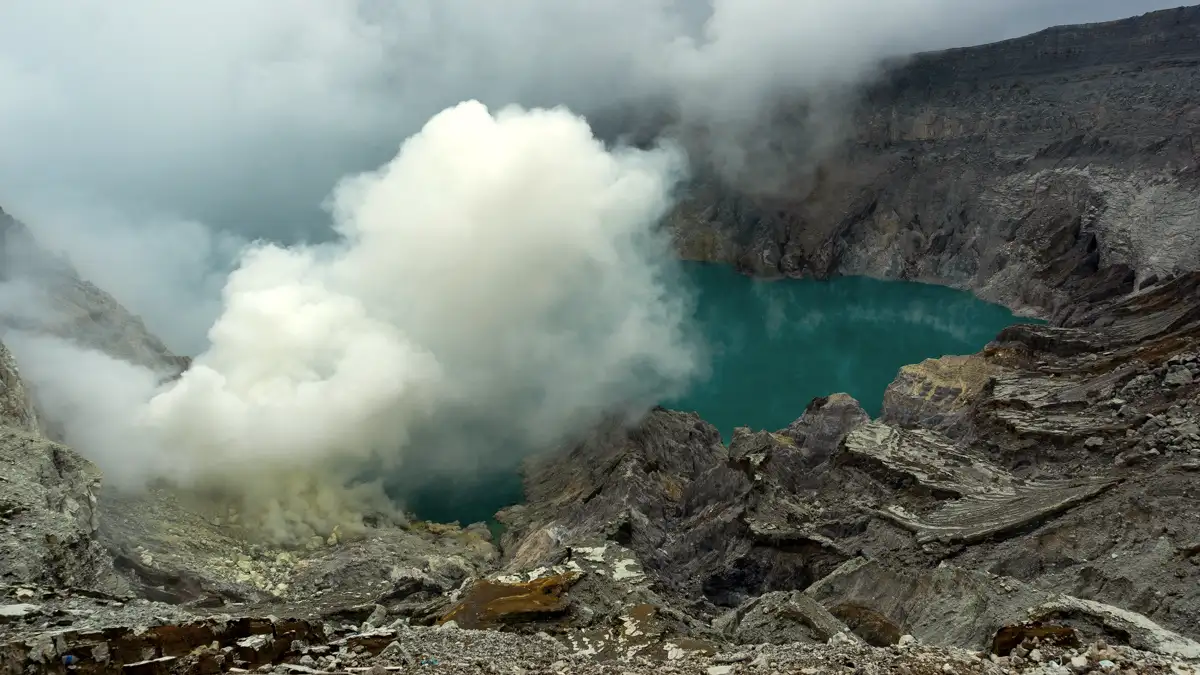
Meanwhile, as the sun begins to rise, the Blue Fire fades, and the acidic crater lake is revealed. This body of water is famous for its stunning turquoise color, which masks its deadly pH level. In fact, it is considered the largest highly acidic lake in the world.
Therefore, never attempt to touch or swim in the water. The combination of sulfuric and hydrochloric acid is extremely corrosive. For more details on this geological marvel, you can read about the Ijen Crater water temperature and its chemical composition.
Essential Safety & Gear
First, a professional-grade gas mask with a proper sulfur filter is non-negotiable. Many cheap rentals at the base are poorly maintained and will not protect your lungs. Consequently, we recommend you book your midnight trek with an operator that provides sanitized, high-quality respirators.
Furthermore, layers are your best friend. The temperature at the trailhead can drop to 5°C, but you will sweat during the steep climb. Once you reach the windy rim and stop moving, your body temperature will plummet rapidly.
Checklist for Your Backpack
- Respirator Gas Mask: Dual-filter masks are best for sulfur.
- Headlamp: Essential for the night climb and crater descent.
- Warm Layers: A windproof jacket and fleece are vital.
- Hiking Boots: Must have good grip for the slippery volcanic ash.
- Water & Snacks: High-energy food like chocolate or nuts.
In addition, consider bringing a small first-aid kit and wet wipes to clean the dust from your face. If you find the climb too difficult, local trolley services in Ijen Crater are available where miners can pull you up the mountain. This is a popular option for those with physical limitations or luxury travelers looking for a unique lift.
Understanding Volcanic Risks
Initially, check the status of the volcano with the local authorities or your tour guide. Since Ijen is an active volcano, it is subject to sudden closures due to increased seismic activity or dangerous gas levels. Specifically, the Indonesian government uses a Level I-IV scale to monitor safety.
Consequently, never bypass safety barriers or closed paths. The gas can be fatal if inhaled in high concentrations without protection. For instance, understanding the hazards of Ijen toxic gas is crucial before you step onto the mountain.
Frequently Asked Questions (FAQ)
Q: Do I really need a guide for Ijen?
A: While it is physically possible to hike alone, a guide is highly recommended for safety. They manage your gas mask, know when the wind shifts dangerously, and handle the complex online permit system. You can check current availability for expert local guides today.
Q: Is the Blue Fire always visible?
A: No, the Blue Fire depends on natural volcanic activity and gas pressure. It is most visible between 2 AM and 4 AM, but visibility varies daily. Always check with your operator for the latest conditions.
Q: What is the best month to visit?
A: The dry season, from April to October, is the best time for hiking. During these months, the trails are less slippery, and the skies are clearer for sunrise. However, the crater is open year-round unless there is extreme volcanic activity.
Q: Is the hike suitable for children?
A: The climb is steep, and the sulfur fumes can be very harsh. Generally, we don’t recommend the crater descent for children under 10 or anyone with respiratory issues. The rim view is usually a safer alternative for families.
Q: How much does the entrance fee cost?
A: For international visitors, the fee is approximately 100,000 IDR on weekdays and 150,000 IDR on weekends. Prices are subject to change by the National Park office, so it is wise to carry extra cash or book a tour that includes all fees.
Continue Your Adventure
After conquering the slopes of Ijen, East Java has much more to offer for the intrepid soul. For instance, many travelers choose to combine their volcanic trek with a Bromo Ijen tour package for the ultimate Javanese experience. If you are starting from Central Java, a Yogyakarta to Ijen expedition provides a seamless transition from cultural sites to natural wonders. For those who want it all, the Bromo Ijen Tumpak Sewu combo includes the island’s most stunning waterfalls. Backpackers often prefer the Banyuwangi local start for its budget-friendly logistics. Finally, luxury travelers arriving at the coast can opt for a multi-day Bali crossover to enjoy the hike in total comfort.
Start Your Ijen Journey Today
Don’t leave your bucket-list adventure to chance. Join East Java’s most trusted trekking experts for a safe, immersive, and unforgettable midnight expedition to the Blue Fire.