What Causes the Blue Fire in Ijen: 5 Volcanic Secrets & Chemistry Exposed (2026 Update)
Specifically, the blue fire in Ijen is caused by the combustion of high-pressure sulfuric gases emerging from volcanic cracks at temperatures up to 600°C. When these gases meet oxygen-rich air, they ignite into brilliant electric blue flames. This phenomenon is a chemical reaction, not blue lava.
Therefore, reaching this ethereal glow requires overcoming freezing midnight temperatures and steep, rocky terrain. However, many travelers feel overwhelmed by the complex logistics and the physical demands of the hike. Consequently, our guide provides the clarity you need to witness this rare spectacle safely.
Moreover, we offer the most comprehensive Ijen crater tour options for every type of adventurer. Ultimately, your journey to the heart of East Java begins with understanding the science and planning your book your tour today.
Author Expertise: Why Trust This Guide
For instance, our team has led over 5,000 successful expeditions to the summit of Mount Ijen. We have spent years documenting the shifts in volcanic activity and sulfur gas density. Furthermore, we collaborate directly with local geological experts to ensure every detail in this guide is factually accurate and safe.
What You Need to Know
💡 Rare Phenomenon: Ijen is one of only two places on Earth where you can see this blue fire. Specifically, the other location is in Iceland, making this a truly global rarity.
💡 Health Safety: You MUST wear a professional gas mask due to high concentrations of sulfur dioxide. In addition, the trek starts at 2:00 AM to ensure you arrive before sunrise.
💡 Best Conditions: The dry season offers the clearest views. Consequently, visiting between May and September increases your chances of seeing the most intense blue flames.
In This Guide
1. The Chemistry of Blue Fire Exposed
2. 5 Volcanic Secrets of the Crater
3. Why It Only Appears at Night
4. Essential Hiking Logistics
5. Frequently Asked Questions
1. The Chemistry of Blue Fire Exposed
First, it is vital to dispel the myth that the blue light is lava. While molten rock glows red or orange, the light here comes from burning gas. Specifically, the Ijen UNESCO Global Geopark site creates a unique pressure cooker environment underground.
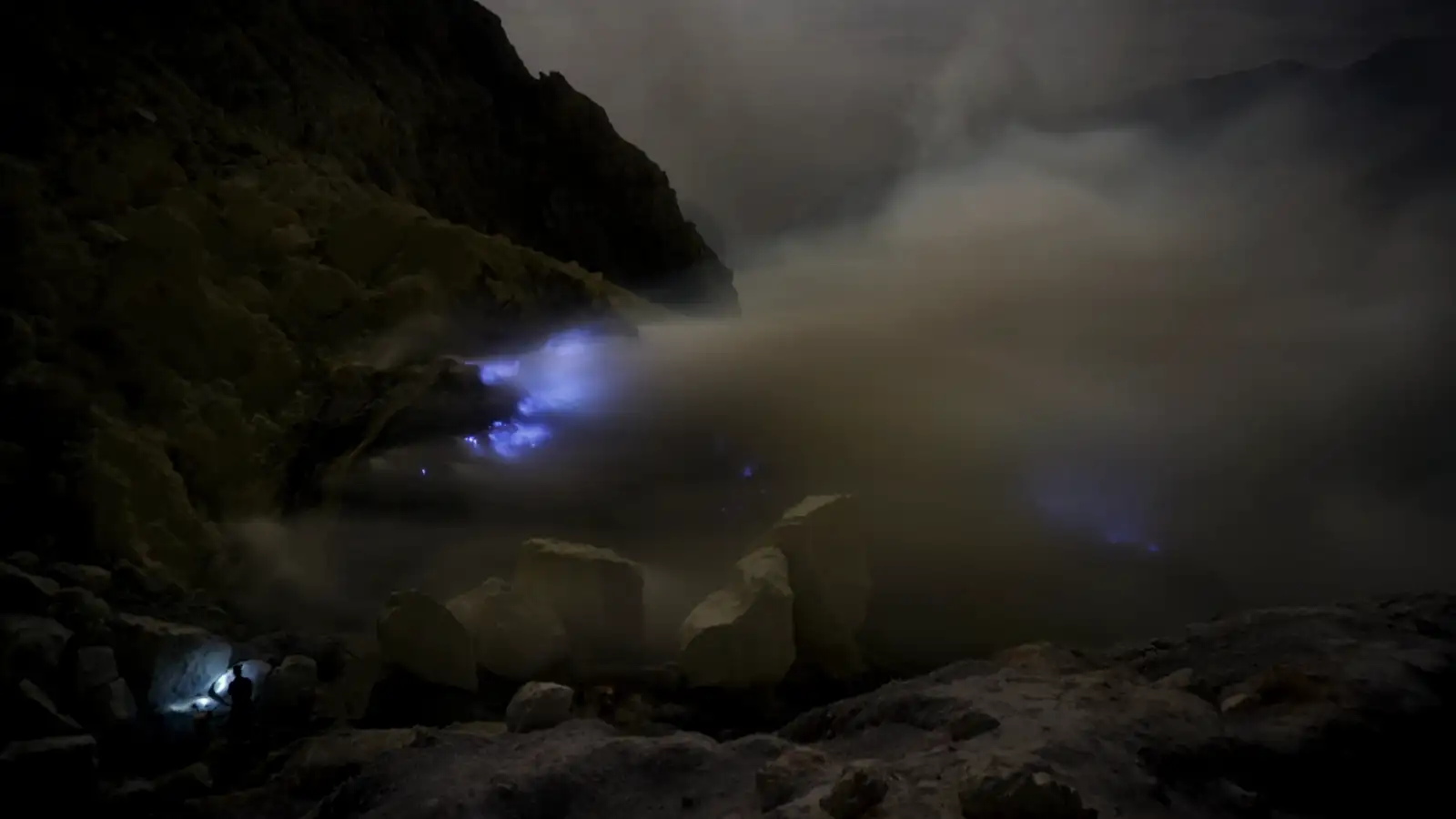
Moreover, sulfuric gases are pushed through narrow volcanic vents under high pressure. When these gases escape and touch the oxygen in the atmosphere, they ignite immediately. As a result, the energy released produces a short wavelength of light, appearing as an intense electric blue.
The Role of Liquid Sulfur
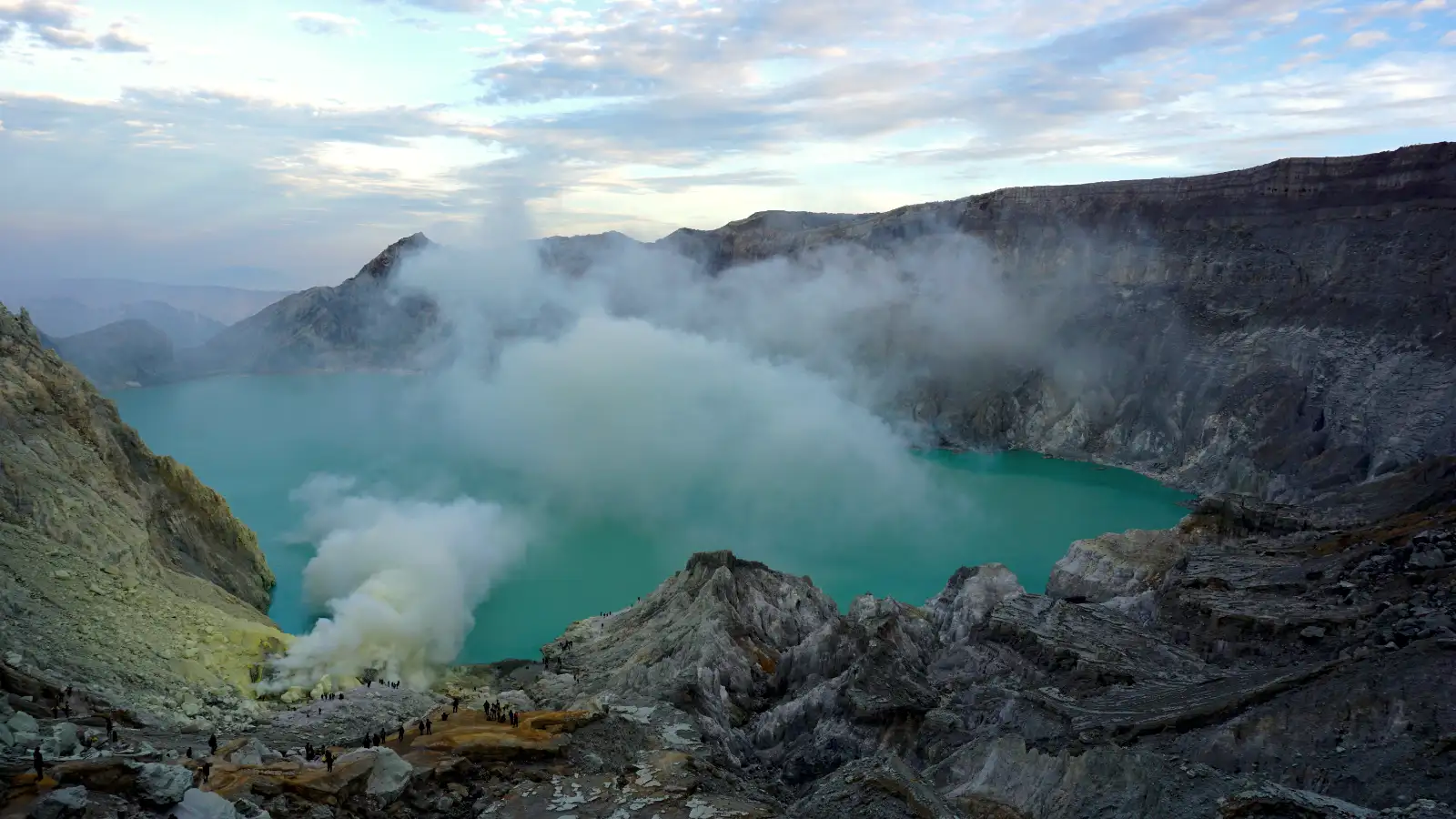
Furthermore, the heat is so intense that the sulfur often melts into a liquid state while still burning. Consequently, you may see glowing blue “rivers” flowing down the rocks. Meanwhile, these liquid streams eventually cool and harden into the bright yellow sulfur deposits seen during the day.
2. 5 Volcanic Secrets of the Crater
In addition to the chemistry, several geological factors must align for the blue fire to exist. First, the gas must be extremely pure and concentrated. For instance, if the gas mixed with too much ash, the flame would lose its brilliance and clarity.
Second, the vents must remain unobstructed by volcanic debris. Therefore, the internal plumbing of the volcano plays a critical role in directing the gas flow. Specifically, recent volcanic activity can either enhance or temporarily silence the flames.
The World’s Most Acidic Lake
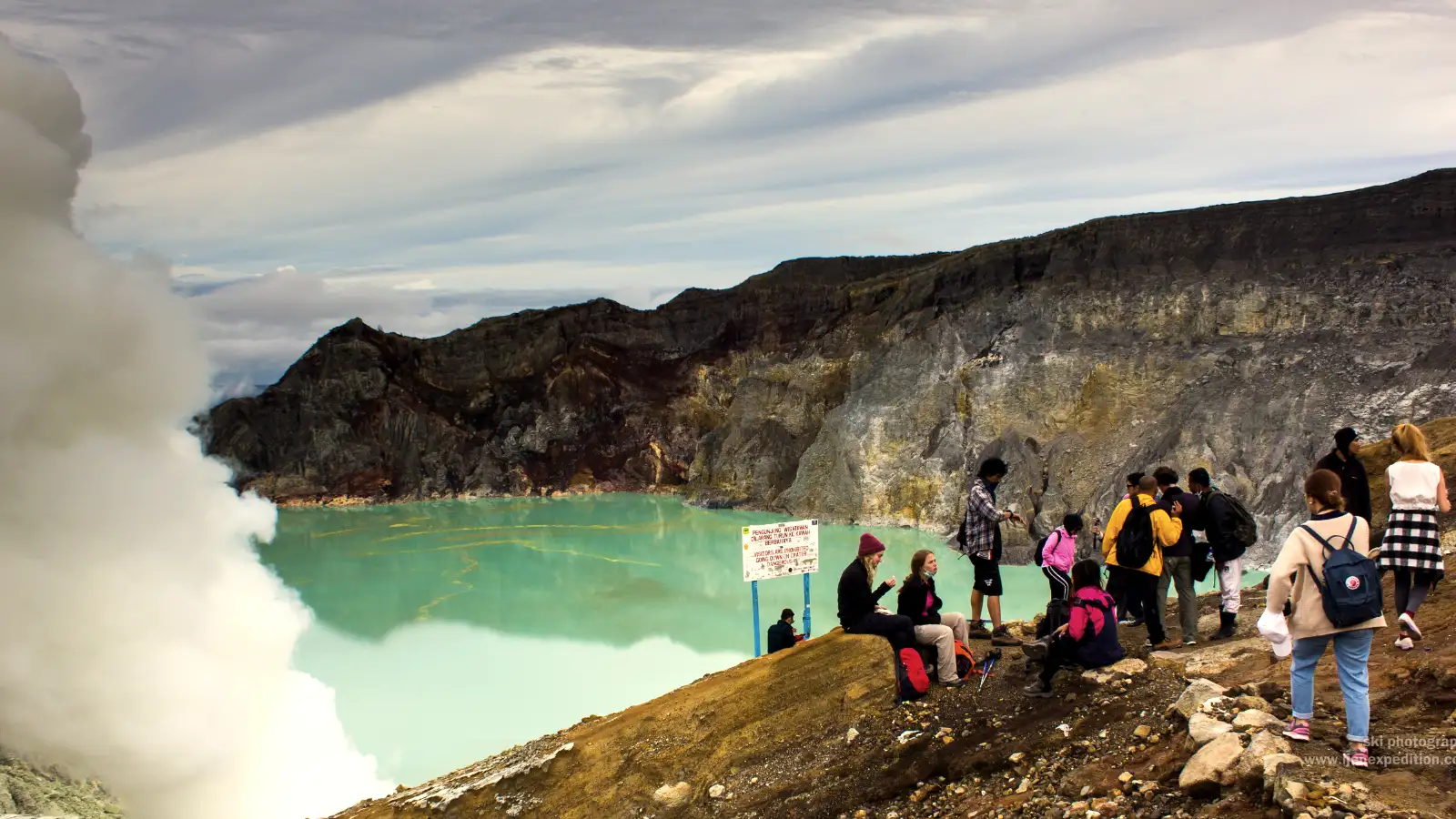
Third, the nearby turquoise lake is actually a massive vat of sulfuric and hydrochloric acid. This lake maintains a pH of nearly 0, which is enough to dissolve metal. Consequently, the interaction between the lake’s acidity and the surrounding vents creates a highly corrosive environment.
Fourth, the local wind patterns in the caldera determine the visibility of the flames. However, if the wind is too strong, it can dissipate the gas before it has a chance to ignite properly. Finally, the elevation of the crater provides the thin, cool air necessary for the flames to stand out.
🔥 Featured Expedition
Experience the world’s most unique volcanic phenomenon with our expert-led night trek. We provide professional gas masks, safety gear, and deep local insights for a flawless adventure.
3. Why It Only Appears at Night
Interestingly, the blue fire is actually burning 24 hours a day. However, the flames are not bright enough to be seen during the daylight hours. Specifically, the sunlight washes out the faint blue light, making the gas appear only as white smoke.
Consequently, hikers must descend into the crater during the darkest hours of the early morning. Therefore, the contrast between the black volcanic rock and the electric blue light creates a surreal, alien-like landscape. As a result, many travelers describe it as “walking on another planet.”
The Importance of Timing
Moreover, the best time to witness the intensity is usually between 2:00 AM and 4:00 AM. Meanwhile, as dawn approaches, the blue hue begins to fade into the golden light of the morning. In addition, reaching the bottom of the crater requires careful footing on slippery, narrow paths.
4. Essential Hiking Logistics
Furthermore, preparing for this trek requires more than just physical fitness. You must understand the best time to visit Ijen crater to avoid heavy rains and mud. For instance, the trail can become dangerously slick during the monsoon season.
Specifically, the entrance fee is currently set at affordable rates for both domestic and international visitors. However, these prices can fluctuate based on government regulations and weekends. Moreover, many choose an Ijen sharing tour from Banyuwangi to keep costs low while ensuring expert guidance.
Equipment Checklist
Therefore, you must pack layers of warm clothing, as temperatures can drop to 5°C at the summit. In addition, sturdy hiking boots with good grip are non-negotiable for the crater descent. Finally, ensure your headlamp has fresh batteries to navigate the dark, winding trails effectively.
| Item | Requirement | Priority |
|---|---|---|
| Gas Mask | N95 or Professional Respirator | Critical |
| Jacket | Insulated/Windproof | High |
| Footwear | Trekking Boots | High |
Continue Your Adventure
Ultimately, witnessing the blue fire is just the beginning of what East Java has to offer. You can easily expand your journey by joining a Mount Ijen hike tour that includes hidden waterfalls and coffee plantations. Furthermore, many travelers choose to book your tour with us to ensure a seamless transition to other iconic sites. For instance, you could consider combining this with a Mount Bromo sunrise adventure or exploring the majestic Tumpak Sewu waterfall.
Start Your Ijen Expedition Today
Don’t leave your bucket-list adventure to chance. Our expert team handles all the details, from professional gear to private transportation, so you can focus on the magic of the blue fire. Specifically, we prioritize your safety and comfort throughout the entire volcanic trek.
Frequently Asked Questions (FAQ)
Q: Is the blue fire visible every night?
A: No, it depends on gas levels and weather. However, booking with a guide increases your chances as they know the best viewing spots.
Q: Is the sulfur gas dangerous for tourists?
A: Yes, the gas is toxic. Therefore, wearing a professional respirator mask is mandatory for anyone descending into the crater.
Q: How difficult is the hike to see the blue fire?
A: It is moderately difficult. Specifically, the 3km climb is steep, and the descent into the crater is rocky and slippery.
Q: Can I see the blue fire after sunrise?
A: No. Furthermore, the sunlight makes the blue flames invisible to the human eye, even though the reaction continues.
Q: What happens if it rains during the trek?
A: Heavy rain can douse the flames or make the trail too dangerous. Consequently, the local authorities may close the crater for safety.