Understanding the Sea of Sand Around Mount Bromo
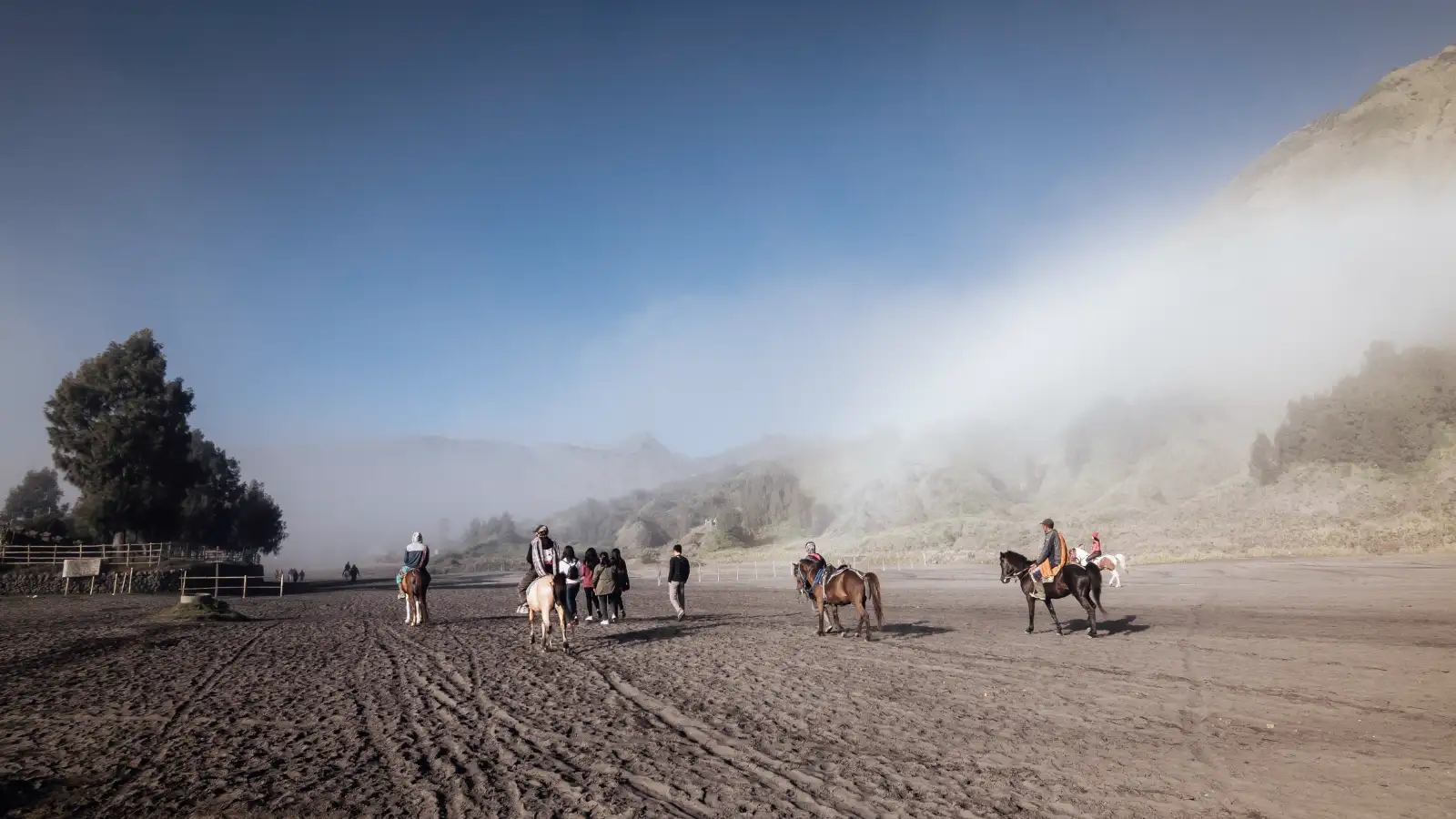
The Bromo Sea of Sand, known locally as Lautan Pasir, is a massive 10-square-kilometer volcanic desert located within the ancient Tengger Caldera in East Java. This vast plain consists of fine grey volcanic ash and sand deposited over centuries of eruptions from the surrounding peaks. Crossing this terrain is a mandatory part of any Mount Bromo tour, serving as the bridge between the caldera rim and the active crater.
What You Need to Know
- ✅ Terrain: Deep, loose volcanic sand that is difficult for standard vehicles.
- ✅ Best Access: Specially modified 4×4 Jeeps are the standard mode of transport.
- ✅ Climate: Extremely cold mornings (down to 5°C) followed by intense dust during mid-day.
- ✅ Logistics: It takes roughly 20-30 minutes to cross via Jeep from the hotels in Cemorolawang.
Table of Contents
The Geological Formation of the Sea of Sand
Ancient eruptions from the Tengger massif created this unique geographical feature thousands of years ago. When the original massive volcano collapsed, it left behind a sprawling caldera that eventually filled with debris. Sediment from ongoing activity continues to reshape the dunes today.
Wind plays a significant role in the appearance of the Lautan Pasir Mount Bromo. Ripples in the sand change daily, mimicking the appearance of an ocean frozen in time. Because the area is surrounded by high caldera walls, the sand remains trapped within this high-altitude basin.
Walking across this expanse makes one realize the sheer scale of the Tengger Caldera. This is not just a tourist path; it is a living laboratory of volcanic history. Understanding the Mount Bromo landscape requires acknowledging that this “sea” is constantly growing with every minor ash emission.
Who Should Skip This Route?
While the scenery is undeniably cinematic, the environment is harsh and unforgiving. Certain travelers might find the experience more distressing than rewarding. Physical health and personal preferences should dictate whether you venture into the heart of the sand.
Individuals with chronic respiratory conditions, such as asthma, should think twice before walking the plain. Fine volcanic dust is easily inhaled and can cause immediate irritation. Wind gusts often whip up sand clouds that reduce visibility and air quality within seconds.
Travelers with severe knee or hip issues might also find the trek challenging. Walking on loose sand requires significantly more effort than solid ground. If you are on a very tight timeline, the slow pace of crossing the volcanic sand plain during peak hours can be frustrating.
🔥 Featured Expedition
Combine the grey dunes of Bromo with the electric blue flames of Ijen on our most popular multi-day route. We handle the 4×4 logistics so you can focus on the views.
Navigating the Volcanic Desert
Most visitors start their journey in a 4×4 Toyota Land Cruiser from the village of Cemorolawang. These vehicles are the only reliable way to manage the Sea of Sand formation without getting stuck. Navigating the descent into the caldera involves steep, narrow paths that require an experienced local driver.
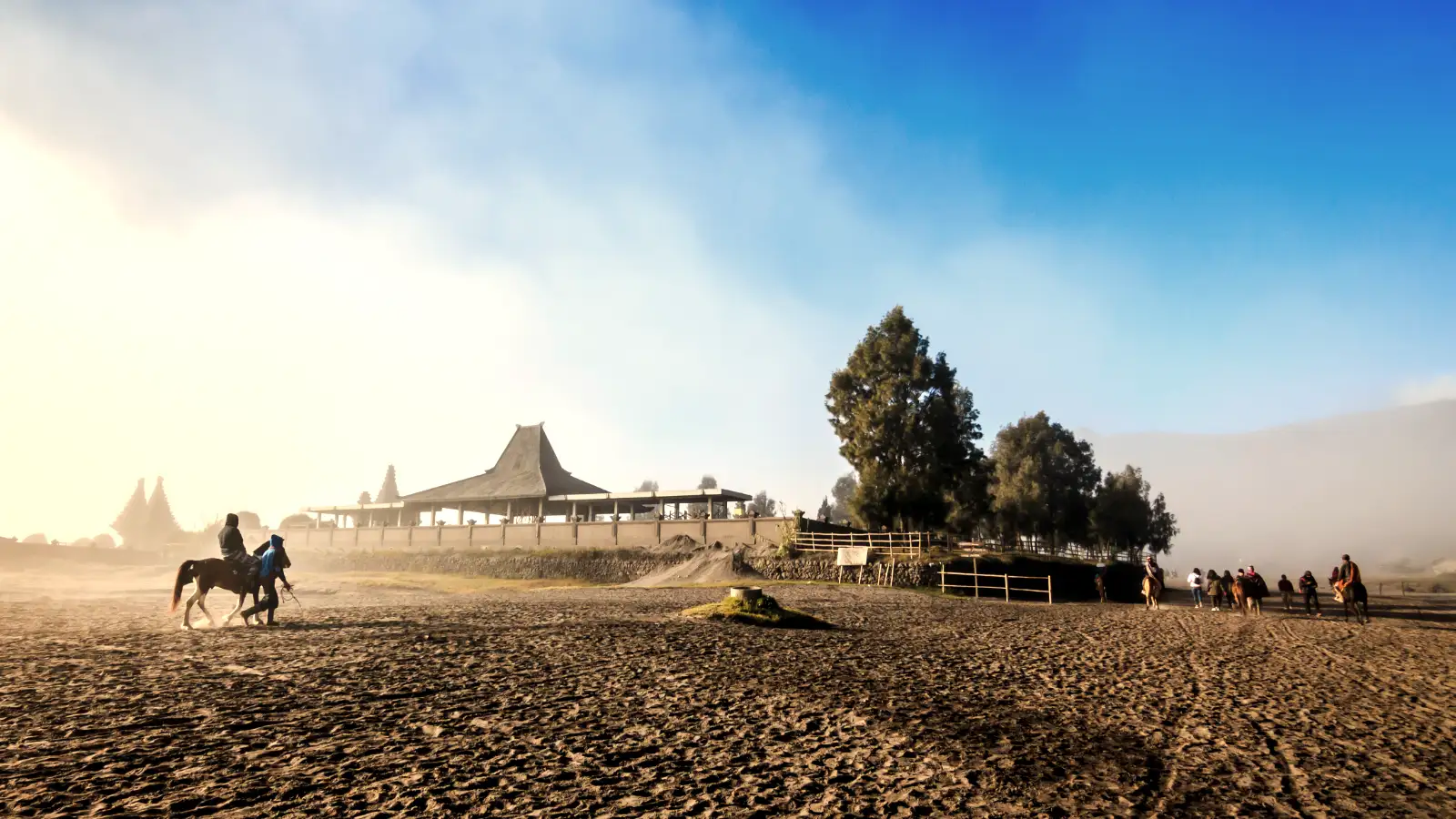
Distance matters when you are planning your morning schedule. From the “entry point” of the sand to the foot of the Bromo stairs is roughly 2.5 kilometers. If your Mount Bromo to Ijen distance is part of a larger trip, efficiency here is key.
Walking is an option for those who want a slower, more immersive experience. Expect the hike to take about 45 to 60 minutes one way under the morning sun. Truth be told, the dust kicked up by passing Jeeps can make walking unpleasant during the 8 AM to 10 AM rush.
Logistical Timeline for Crossing
- 04:30 AM: Sunrise at King Kong Hill or Penanjakan.
- 06:00 AM: Descent into the Sea of Sand via Jeep.
- 06:30 AM: Arrival at the Jeep parking area near Poten Temple.
- 07:00 AM: Final trek to the Bromo Crater rim.
Essential Gear for Lautan Pasir
Packing correctly can make or break your time in the East Java volcanic desert. Footwear is the most critical decision you will make. Closed-toe shoes with good ankle support are necessary to keep the hot, abrasive sand away from your skin.
Protection against the elements is the next priority. A high-quality face mask (N95 or a thick buff) is non-negotiable for exploring the Sea of Sand Bromo. Even on calm days, the fine ash can linger in the air, especially when horses or Jeeps pass by.
Layering your clothing allows you to adapt to the drastic temperature shifts. While it feels like winter at 4 AM, the sun reflecting off the grey sand by 9 AM can be surprisingly hot. Reviewing a packing guide for Mount Bromo before you depart Bali or Surabaya is highly recommended.
Comparative Transit Options
| Method | Pros | Cons |
|---|---|---|
| 4×4 Jeep | Fast, comfortable, protects from wind. | Higher cost, follows set routes. |
| Hiking | Free, quiet, great for photography. | Exhausting, heavy dust exposure. |
| Horseback | Unique experience, saves energy. | Uncomfortable for some, ethical concerns. |
Why Trust This Guide?
Our team has spent decades navigating the specific terrains of East Java. We don’t just book tours; we understand the mechanical limits of Jeeps and the physical limits of hikers in the Bromo natural attraction. Every piece of advice here comes from real-world field experience across thousands of successful expeditions.
Logistical accuracy is our priority. We monitor the current conditions of the Mount Bromo hike difficulty daily to ensure our guests are prepared. Whether you are a solo backpacker or a luxury traveler, our insights are designed to maximize safety and visual reward.
Frequently Asked Questions
Can I drive my own car across the Sea of Sand?
No, standard rental cars are strictly prohibited from entering the caldera floor. The terrain requires high clearance and 4WD. Most travelers hire a Bromo Jeep service with a local driver who knows the safe paths through the soft sand.
Is the Sea of Sand dangerous during rain?
Heavy rain can turn the volcanic ash into thick, sticky mud. This makes crossing difficult even for Jeeps. Flash floods are rare but possible in the deeper parts of the caldera, so always follow local guide instructions during the wet season.
What is the best time for photography in the sand plain?
Golden hour, approximately 6:30 AM to 7:30 AM, provides the best lighting. The long shadows cast by the dunes and the “whispering” effect of the wind-blown sand create a surreal atmosphere. Arriving too late means harsh overhead sun and flat colors.
Are there toilets available in the middle of the sand?
Facilities are very limited. There are basic toilets near the Jeep parking area by the Poten Temple. It is highly recommended to use the facilities at your hotel or at the sunrise viewpoint before descending into the caldera.
Why is it called the “Sea of Sand”?
The name comes from the way the wind creates waves across the dark surface. From the caldera rim, the flat expanse looks like a grey ocean. When the wind blows hard, the sand “whispers” and moves in a fluid-like motion.
Continue Your Adventure
The Sea of Sand is just the beginning of what East Java has to offer. Consider these popular routes to extend your journey across the island:
- 📍 Bromo Ijen Tour from Surabaya 3D2N
- 📍 Bromo Ijen Tour from Surabaya to Bali
- 📍 Bromo Ijen Tour to Banyuwangi
- 📍 Bromo Ijen Tour from Bali 3D2N
- 📍 Bromo Ijen Tour from Banyuwangi
Ready to Cross the Sea of Sand?
Don’t leave your Bromo logistics to chance. Let our veteran local team handle the 4×4 transport and permits while you enjoy the most iconic landscape in Indonesia.