What Makes Mount Bromo Geologically Unique?
What You Need to Know
Mount Bromo is a rare intracaldera volcano, meaning it formed inside the massive collapse of a much larger, ancient volcano known as Tengger. Unlike isolated peaks, Bromo sits within a 10-kilometer-wide “Sea of Sand” (Lautan Pasir), surrounded by steep caldera walls that reach up to 300 meters high. This geological arrangement creates a surreal, Martian landscape that is unique even among Indonesia’s 130+ active volcanoes.
Table of Contents
Why Trust This Guide
Our team consists of veteran field reporters and local geology enthusiasts who have spent decades traversing the East Java volcanic corridor. We combine real-world field observations with seismic data to provide an accurate, nuanced look at the Bromo-Tengger-Semeru massif. This isn’t just a travel itinerary; it is a technical breakdown of one of the world’s most fascinating active landforms.
Mount Bromo is far more than a sunrise photo opportunity. Truly understanding what makes Mount Bromo different from other volcanoes requires looking at the ground beneath your feet. This landscape is a living record of catastrophic collapses and persistent rebirth.
The Tengger Caldera: A Volcanic Super-Structure
Geological uniqueness begins with the massive Tengger Caldera. Imagine a mountain so large it collapsed under its own weight after a colossal prehistoric eruption. This event left behind a massive, flat-bottomed bowl approximately 10 kilometers in diameter.
Most volcanoes are singular cones rising from the plains. Bromo, however, is a secondary feature born from the ruins of its predecessor. Scientists classify this as a “somma-volcano” relationship, where a new cone grows within an older, collapsed crater.
A Timeline of Massive Collapses
The caldera didn’t form in a single day. Multiple phases of explosive activity led to the sinking of the ground over thousands of years. Today, the sheer cliffs of the caldera rim act as a natural fortress, protecting the inner volcanic complex from the surrounding tropical vegetation.
The Intracaldera Complex: A Nest of Volcanoes
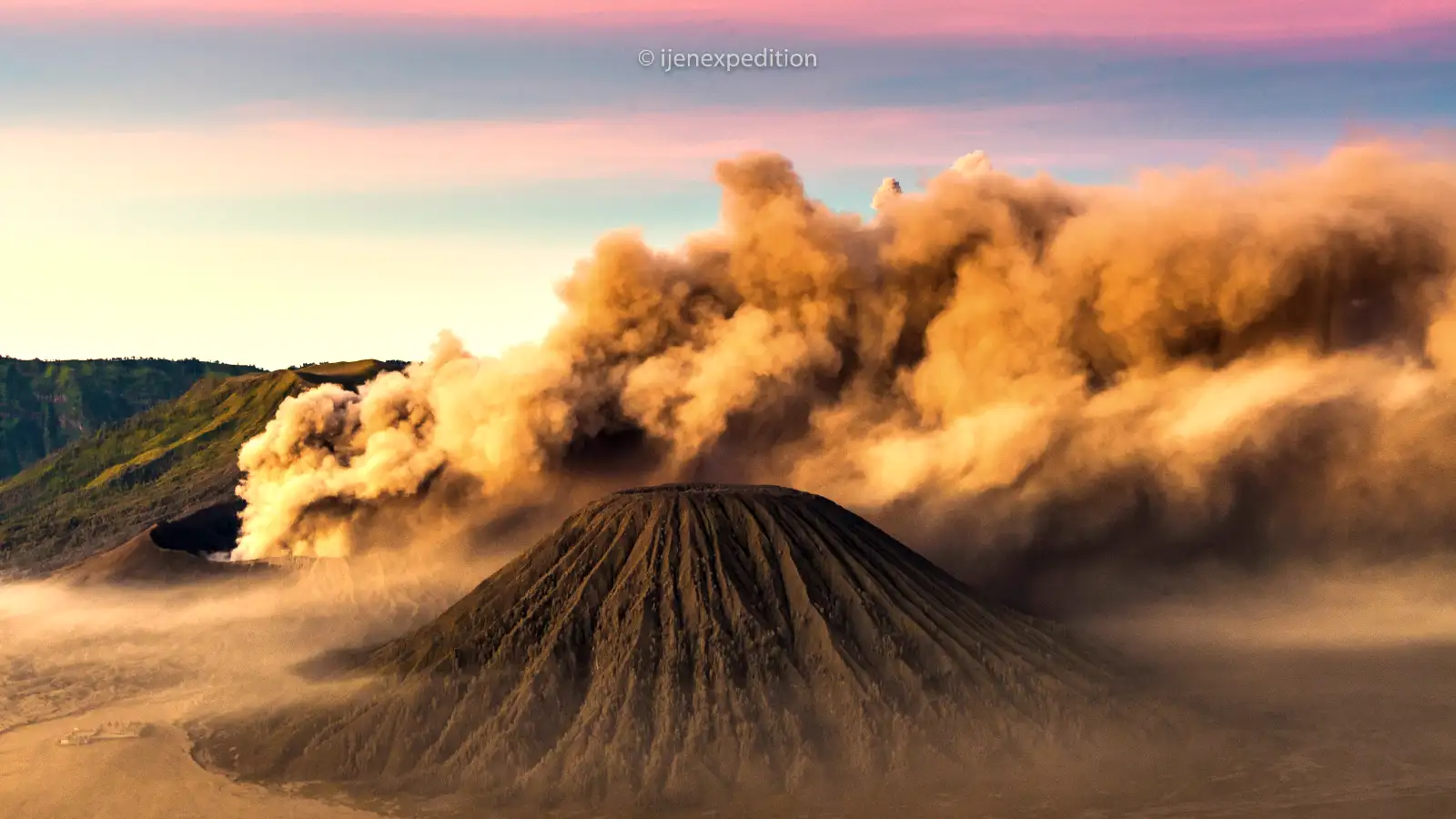
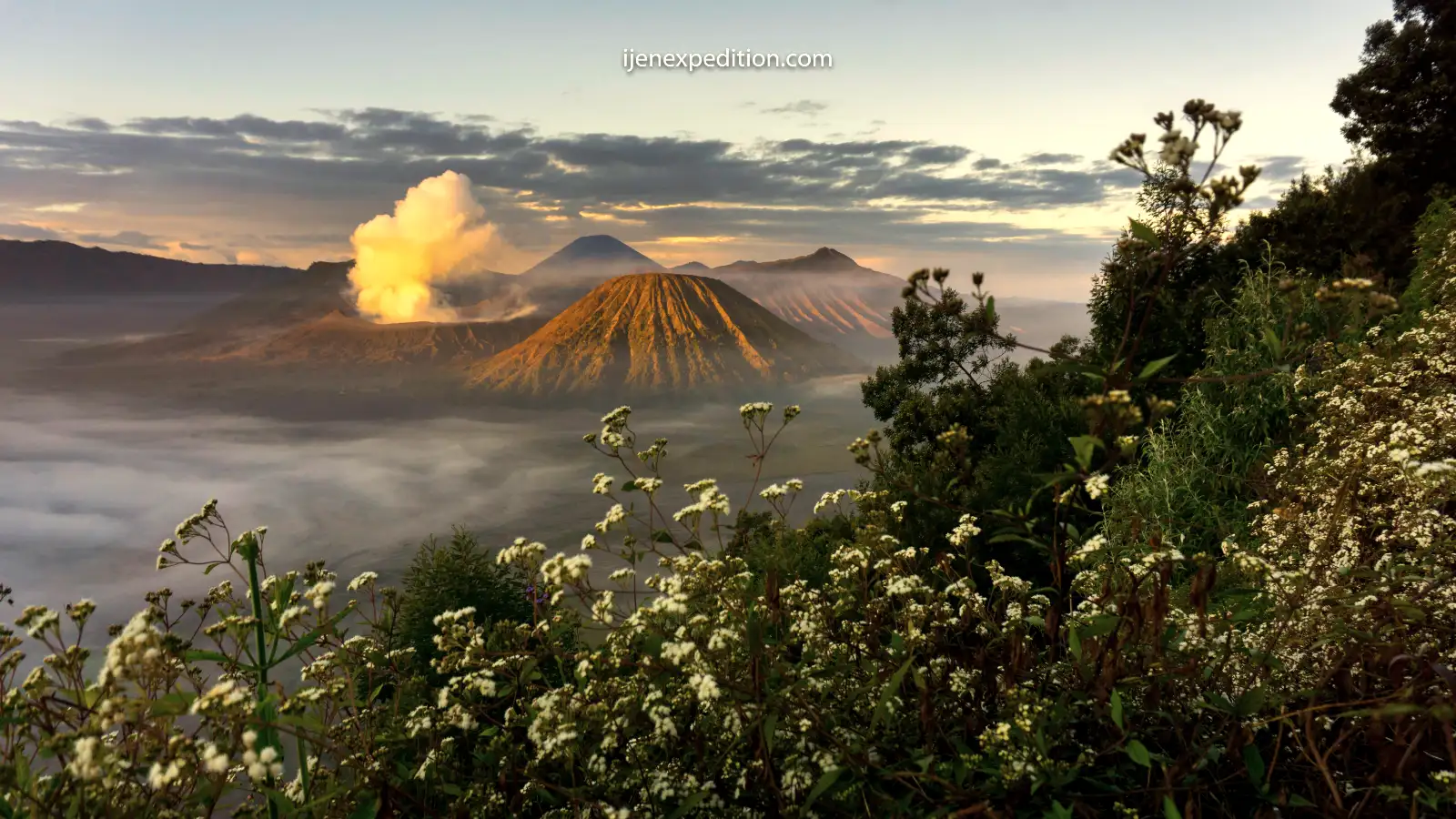
Bromo does not stand alone in the sand. It is part of a cluster of five volcanic cones that emerged from the caldera floor. These include Mount Kursi, Mount Watangan, Mount Widodaren, and Mount Batok.
Mount Batok is particularly striking because it is now extinct and covered in lush greenery. Bromo remains the youngest and most restless of the group. Seeing an active, smoking vent right next to a dormant, vegetated cone highlights the erratic nature of volcanic evolution.
🔥 Featured Expedition
Witness the raw power of the Tengger Caldera with our expert-led private expeditions. We handle the logistics so you can focus on the geology.
The Sea of Sand: Nature’s Dust Bowl
Surrounding these peaks is the “Lautan Pasir” or Sea of Sand. This vast desert of volcanic ash and fine debris covers nearly 5,300 hectares. It is a rare geological feature in a region otherwise dominated by thick rainforests and rice paddies.
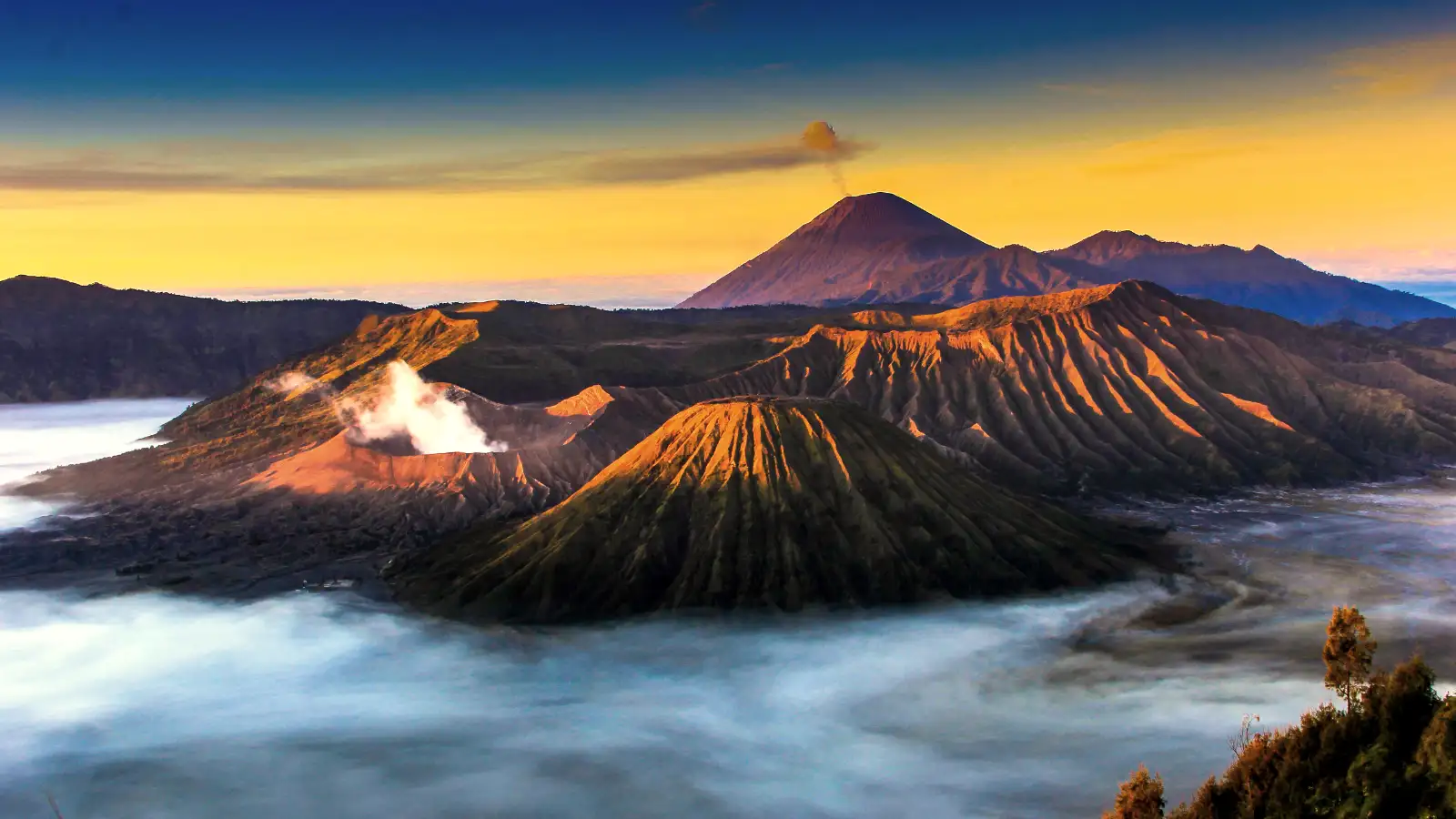
Wind erosion constantly reshapes this gray landscape. Walking across it feels like stepping onto another planet. The sand is actually composed of fine volcanic tephra and ash from centuries of eruptions from the Mount Bromo vent.
Hydrological Anomalies in the Sand
Rainfall quickly disappears into the porous volcanic soil. Because the sand is so permeable, no permanent rivers flow across the caldera floor. This creates an arid microclimate inside a tropical island, a sharp contrast that fascinates botanists and geologists alike.
Eruption Dynamics and Activity
Bromo is a hyperactive volcano. It frequently enters phases of “Strombolian” activity, characterized by the rhythmic ejection of incandescent cinders and ash clouds. Unlike the massive lava flows of Hawaii, Bromo mostly coughs up particulate matter and sulfurous gas.
Frequent activity keeps the crater rim sharp and unstable. Visitors should always check the Mount Bromo last eruption status before planning a trek to the summit. Sudden phreatic explosions—steam-driven blasts—can occur without significant warning.
Comparison: Bromo vs. Other Regional Volcanoes
| Feature | Mount Bromo | Ijen Crater | Mount Semeru |
|---|---|---|---|
| Type | Cinder Cone in Caldera | Stratovolcano with Acid Lake | Active Stratovolcano |
| Landscape | Arid Ash Desert | Lush Rim / Sulfur Mine | Alpine / Rock Scree |
| Main Activity | Ash & Gas Eruptions | Sulfuric Gas / Blue Fire | Lava Domes / Ash Bursts |
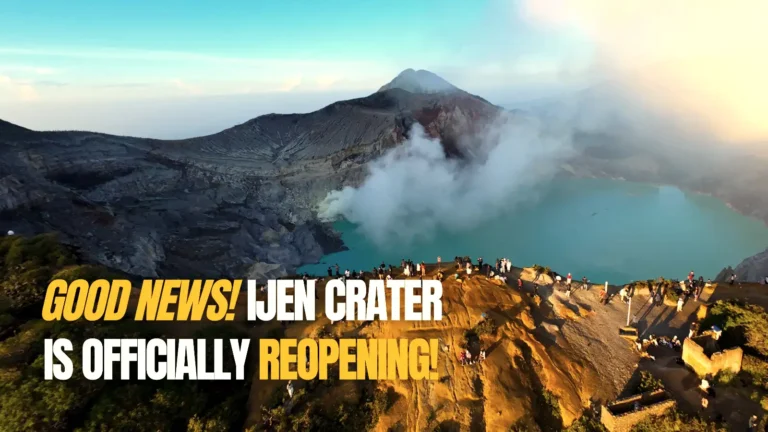
Many travelers choose a Bromo Ijen tour to see these contrasting geological wonders. While Bromo is an open ash desert, Ijen is famous for its hyper-acidic lake and liquid sulfur deposits. Comparing the two provides a full spectrum of volcanic diversity. You can read more about the differences in our guide on why you should visit both volcanoes.
Who Is This NOT For?
Mount Bromo is objectively stunning, but it is not a “perfect” destination for everyone. The environment is harsh and poses specific risks that are often downplayed in glossy brochures.
Individuals with chronic respiratory conditions, such as asthma or COPD, should think twice. The air at the crater rim is often thick with sulfur dioxide (SO2), which can cause immediate distress. Even healthy travelers might find the dry, dust-heavy air of the Sea of Sand taxing on the lungs.
Families with toddlers may also find the logistics challenging. The “hike” involves a significant amount of fine dust and hundreds of steep, narrow concrete stairs. If you are concerned about the physical requirements, consult our analysis on volcano hike difficulty.
Continue Your Adventure
If the unique geology of Bromo has captured your imagination, the surrounding region offers even more to explore. You might consider a Bromo Midnight Tour for a quick strike or a more comprehensive 2-Day Sunrise Experience. For those wanting to see the full East Java volcanic arc, our Ijen Crater Expedition is the logical next step. Many travelers find the 4-Day Adventure from Bali to be the most rewarding way to see these landmarks. Finally, don’t miss the chance to book your custom tour to ensure every detail of your geological journey is handled by experts.
Frequently Asked Questions
Safety depends on current seismic activity. Local authorities monitor the volcano 24/7 and will close the crater rim if gas levels or tremors increase beyond safe limits.
The gray color comes from high concentrations of volcanic ash and basaltic sand ejected during Bromo’s frequent eruptive cycles.
Yes, walking is possible, but it is physically demanding. The fine sand makes every step harder, and the lack of shade means you are exposed to intense UV rays and dust.
Mount Batok is dormant, allowing soil to stabilize and vegetation to grow. Bromo’s constant ashfall and sulfur emissions prevent plants from taking root.
The crater depth fluctuates due to activity, but it is typically around 200 to 300 meters deep from the rim to the floor.
Ready to Witness Geological History?
Join Ijen Expedition for a deep dive into the heart of East Java’s volcanic wonders. Our guides are experts in navigating the Tengger Caldera safely and comfortably.