How Mount Bromo Was Formed: The Geological Evolution of a Legend
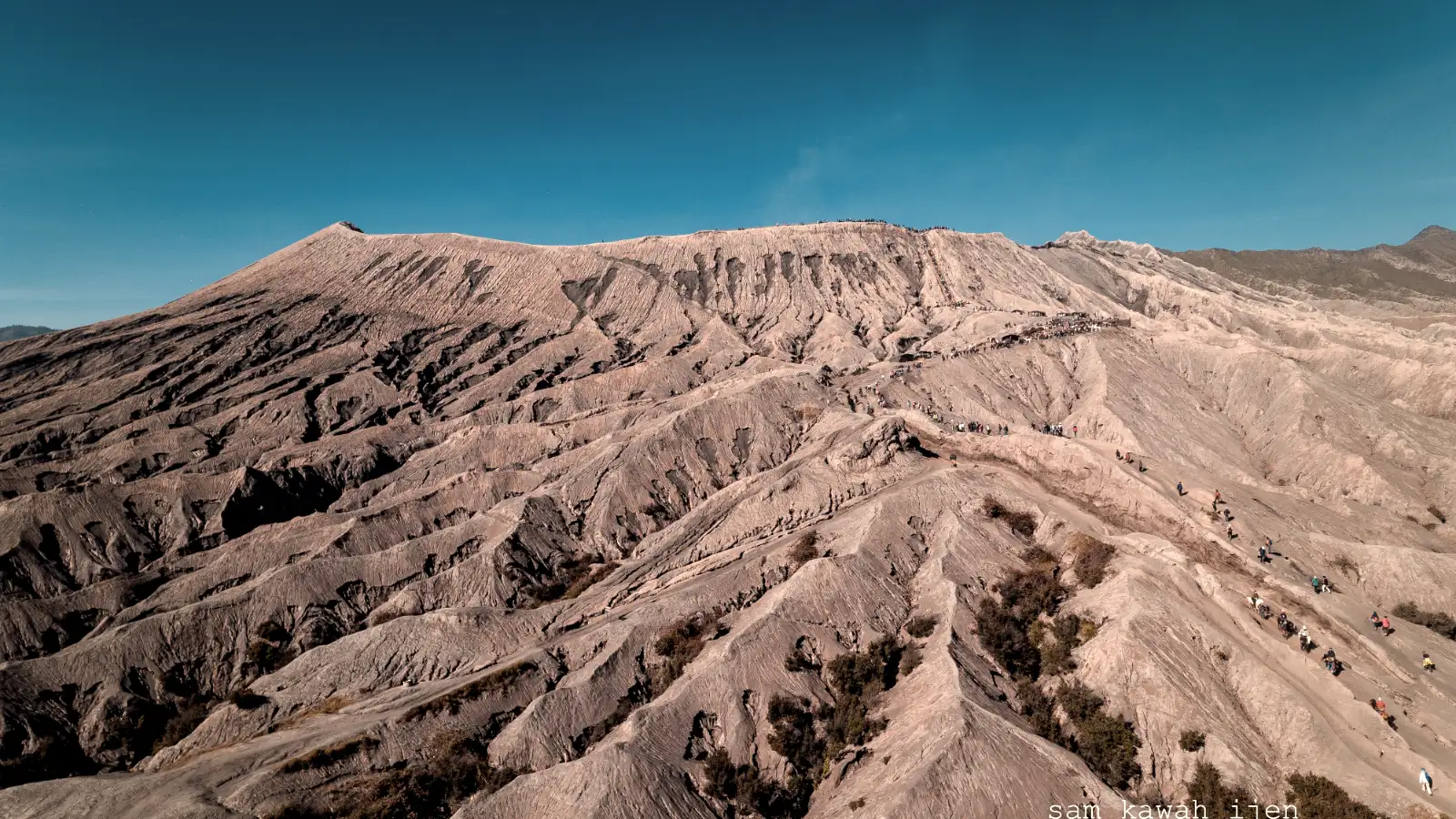
Mount Bromo formed through the cataclysmic collapse of an ancient prehistoric volcano known as the “Old Tengger.” Around 45,000 years ago, a massive eruption emptied the magma chamber of this 4,000-meter giant, causing the entire peak to fall inward. This collapse created the massive 10-kilometer-wide Tengger Caldera, within which smaller volcanic cones like Mount Bromo eventually emerged as new vents for seismic energy.
What You Need to Know
- Origin: Created by the collapse of the 4,000m Ancient Tengger volcano.
- Caldera Size: The resulting “Sand Sea” spans approximately 10 kilometers.
- Current State: Bromo is one of several active vents within the caldera floor.
- Geology: Classified as a cinder cone volcano inside a large stratovolcano caldera.
Table of Contents
Why Trust This Guide?
Our team at Ijen Expedition consists of veteran field reporters and local geology experts who have spent decades navigating the East Java volcanic belt. We provide first-hand insights combined with data from the Indonesian Center for Volcanology and Geological Hazard Mitigation. If you are planning to Book Your Tour, understanding the landscape’s history ensures a far more profound experience on the ground.
The Rise of the Prehistoric Tengger
Millions of years ago, the landscape of East Java looked vastly different from what we see today. Subduction of the Indo-Australian plate beneath the Eurasian plate fueled intense volcanic activity along the “Ring of Fire.” This constant movement forced magma to the surface, slowly building a massive mountain called the Ancient Tengger.
Experts believe this prehistoric peak was once the tallest mountain in Java, reaching heights that rivaled Mount Semeru. It functioned as a classic stratovolcano, composed of alternating layers of hardened lava and volcanic ash. Understanding why Mount Bromo is Indonesias most visited volcano requires acknowledging this massive scale.
The Great Caldera Collapse
Disaster struck roughly 45,000 years ago when the Ancient Tengger could no longer support its own weight. A series of incredibly powerful explosive eruptions drained the magma reservoir deep beneath the surface. Without the internal pressure of the magma, the mountain’s summit plummeted into the hollowed-out Earth.
This event resulted in the formation of the “Sand Sea” or Tengger Caldera, a vast, flat plain of volcanic debris. Such a dramatic transformation is part of what makes Mount Bromo different from other volcanoes in the region. Unlike solitary peaks, Bromo sits in a graveyard of its ancestor, surrounded by towering caldera walls.
🔥 Featured Expedition
Witness the living history of the Tengger Caldera with our expert-led private tours. We take you beyond the crowds to the most dramatic viewpoints of the volcanic complex.
The Birth of the Bromo Cinder Cone
The story did not end with the collapse of the old mountain. Seismic activity continued to search for new outlets within the broken caldera floor. Over several thousand years, five new volcanic cones began to emerge from the sand: Bromo, Batok, Kursi, Watangan, and Widodaren.
Mount Bromo is the only vent in this group that remains intensely active today. Frequent eruptions continuously reshaped its crater, ejecting fresh ash that contributes to the stark, lunar-like appearance of the surrounding plains. To understand the risks of this activity, read about the Mount Bromo last eruption travel tips before visiting.
Geological Timeline of Formation
| Phase | Timeframe | Event |
|---|---|---|
| Ancient Formation | 800,000+ years ago | Growth of the massive Ancient Tengger stratovolcano. |
| First Collapse | Approx. 45,000 years ago | Creation of the first major caldera. |
| Second Collapse | Approx. 22,000 years ago | Formation of the modern Tengger Caldera (Sand Sea). |
| Cinder Cone Growth | Last 10,000 years | Emergence of Bromo and Batok cones from the caldera floor. |
| Modern Activity | Recorded History | Persistent sulfur emissions and periodic ash eruptions. |
Who Should Skip This Destination?
While the geological history is fascinating, Mount Bromo is not suitable for everyone. Travelers with chronic respiratory issues or severe asthma should be extremely cautious due to the high concentration of sulfur dioxide in the air. The fine volcanic ash can also irritate the eyes and lungs, even on quiet days.
Families traveling with very young infants may find the 1 AM wake-up calls and dusty jeep rides too taxing. Additionally, if you have severe knee problems, the climb up the 250 stairs to the crater rim might be prohibitive. Consider checking the Mount Bromo hike difficulty to gauge your own physical readiness.
Continue Your Adventure
Exploring East Java’s volcanic wonders is a multi-day endeavor. Once you have seen the sunrise over the Tengger massif, consider these highly recommended routes to complete your journey. We offer a variety of Java tours that connect Bromo with other iconic sites. You can join the famous Bromo Ijen Tour or opt for the comprehensive 4-Day Bromo Tumpak Sewu Ijen expedition. For those coming from the west, the Bromo Ijen Tumpaksewu Guide is essential. If you are starting from the islands, look into our Ijen Crater tour from Bali. For a wilder experience, the Bromo Ijen Sukamade tour offers a mix of volcanoes and turtle conservation.
Frequently Asked Questions
How old is Mount Bromo?
The Mount Bromo cone itself is estimated to be several thousand years old, but the larger caldera it sits within was formed roughly 45,000 years ago. It is a relatively young feature in the context of Java’s geological history.
Is Mount Bromo still an active volcano?
Yes, Mount Bromo is highly active. It frequently emits plumes of white sulfur smoke and occasionally erupts ash. Our first-time visitors guide to Mount Bromo covers safety precautions for these conditions.
What created the Sand Sea?
The Sand Sea is the floor of the Tengger Caldera. It was created when the Ancient Tengger mountain collapsed, filling the basin with ash, pumice, and volcanic debris that has been leveled by wind and rain over millennia.
Can I hike to the crater safely?
Generally, yes, as long as the local authorities have not issued an exclusion zone. Checking local status reports is vital, as Bromo can be closed with very little notice if seismic activity increases.
How tall was the original mountain?
The Ancient Tengger volcano is estimated to have reached approximately 4,000 meters above sea level. This would have made it significantly taller than the current highest point in Java, Mount Semeru.
Experience the Power of Bromo
Ready to walk on the surface of an ancient caldera? Let our experts handle the logistics for your volcanic adventure in East Java.