The Tengger Caldera: A Journey Through Ancient Volcanic History
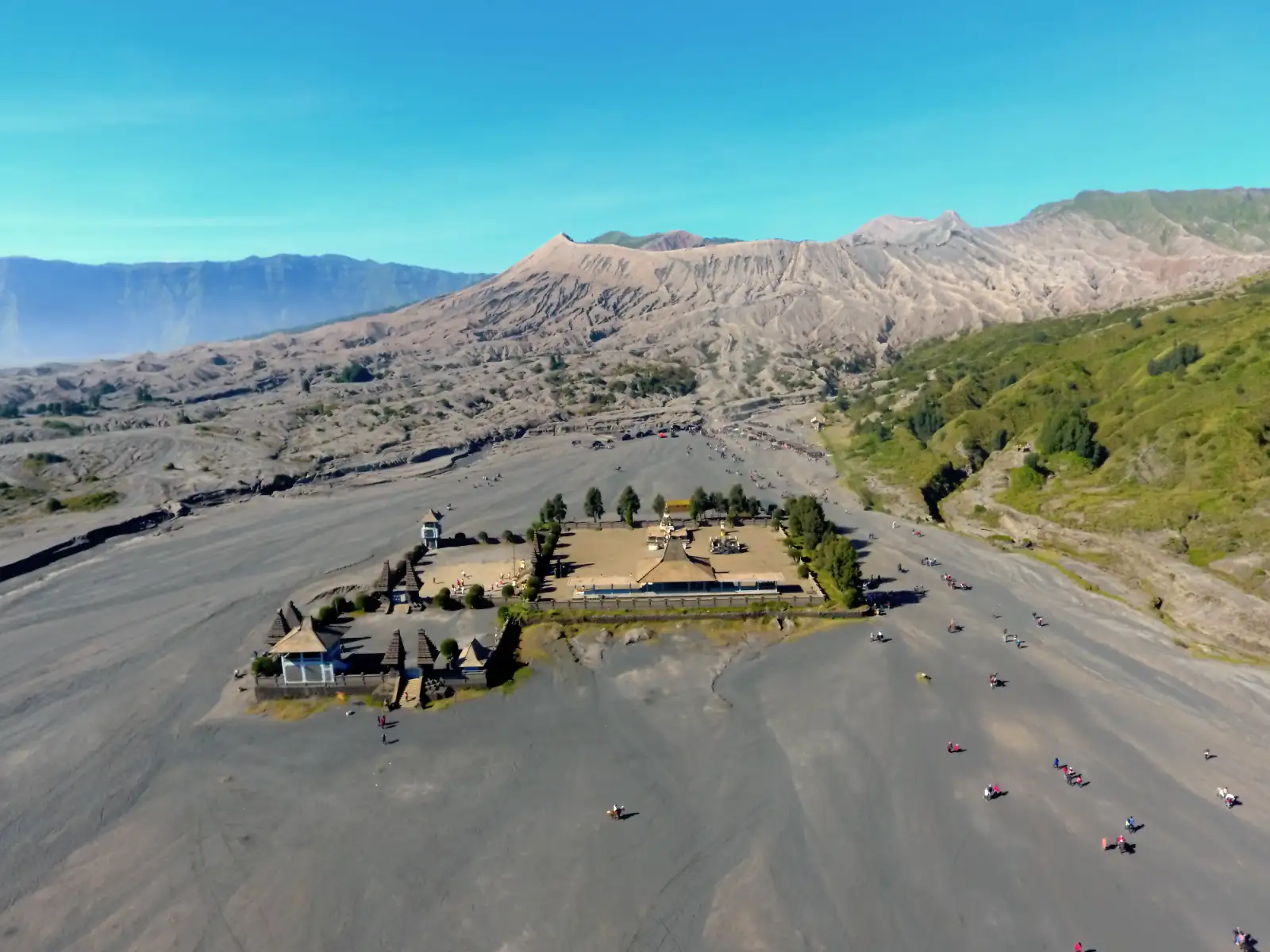
The Tengger Caldera is a massive 10-kilometer-wide volcanic depression in East Java, Indonesia, housing the active Mount Bromo. Formed through centuries of cataclysmic eruptions, this geological marvel features the “Sea of Sand” and represents one of the most complex volcanic systems on Earth.
What You Need to Know
- Geological Origin: A “caldera within a caldera” structure formed by the collapse of the ancient Tengger volcano.
- Key Features: The Sea of Sand (Segara Wedi), Mount Bromo, Mount Batok, and Mount Widodaren.
- Travel Significance: It is a UNESCO-recognized landscape and a primary destination for adventure seekers in Indonesia.
- Altitude: The caldera floor sits at approximately 2,100 meters above sea level.
Table of Contents
Why Trust This Guide
Our team of veteran field reporters and geological enthusiasts has spent decades navigating the rugged terrains of East Java.
Knowledge shared here is rooted in both academic geological research and real-world expedition experience.
We aim to provide the most accurate, data-driven perspective for travelers planning their comprehensive Java exploration.
Formation of the Tengger Volcanic Complex
Centuries ago, a massive stratovolcano dominated the skyline of East Java, towering significantly higher than any peak today.
Geologists estimate that a series of explosive eruptions caused the summit to collapse into its magma chamber, creating the first giant caldera.
This process eventually repeated, leading to the “nested” caldera structure we observe in the modern Mount Bromo volcanic landscape.
Volcanic activity within the Tengger complex is driven by the subduction of the Indo-Australian plate beneath the Eurasian plate.
Magma rises through the crust, fueling the five distinct volcanoes located within the sand sea.
Mount Bromo remains the most active child of this ancient geological parent, constantly reshaping its immediate surroundings.
Understanding the timeline requires looking at layers of ash and tephra deposited across the Probolinggo and Pasuruan regions.
Scientific dating suggests the oldest parts of the complex began forming hundreds of thousands of years ago.
Travelers often wonder how to choose the right tour to see these layers up close during a sunrise trek.
🔥 Featured Expedition
Experience the raw power of the Tengger Caldera with our top-rated multi-day adventure. Witness the sunrise over the Sea of Sand and hike the crater rim of Mount Bromo.
The Enigmatic Sea of Sand (Segara Wedi)
Vast expanses of grey volcanic ash and sand stretch across the caldera floor, earning it the name Segara Wedi.
Walking across this desert-like environment feels surreal, especially when the morning mist clings to the ground.
This area is actually a protected nature reserve, serving as a stark contrast to the lush green forests surrounding the outer rim.
Erosion plays a massive role in maintaining the appearance of the sand sea.
Heavy rains during the wet season carve temporary riverbeds into the soft volcanic debris, while winds redistribute fine particles during the dry months.
If you are planning a Mount Bromo adventure, crossing this plain is a mandatory part of the journey.
Local culture also finds its home within this geological feature.
The Tenggerese people believe the caldera is a sacred space, often holding the Yadnya Kasada ceremony right on the slopes of the active vent.
Integrating geological knowledge with cultural respect makes for a much deeper travel experience.
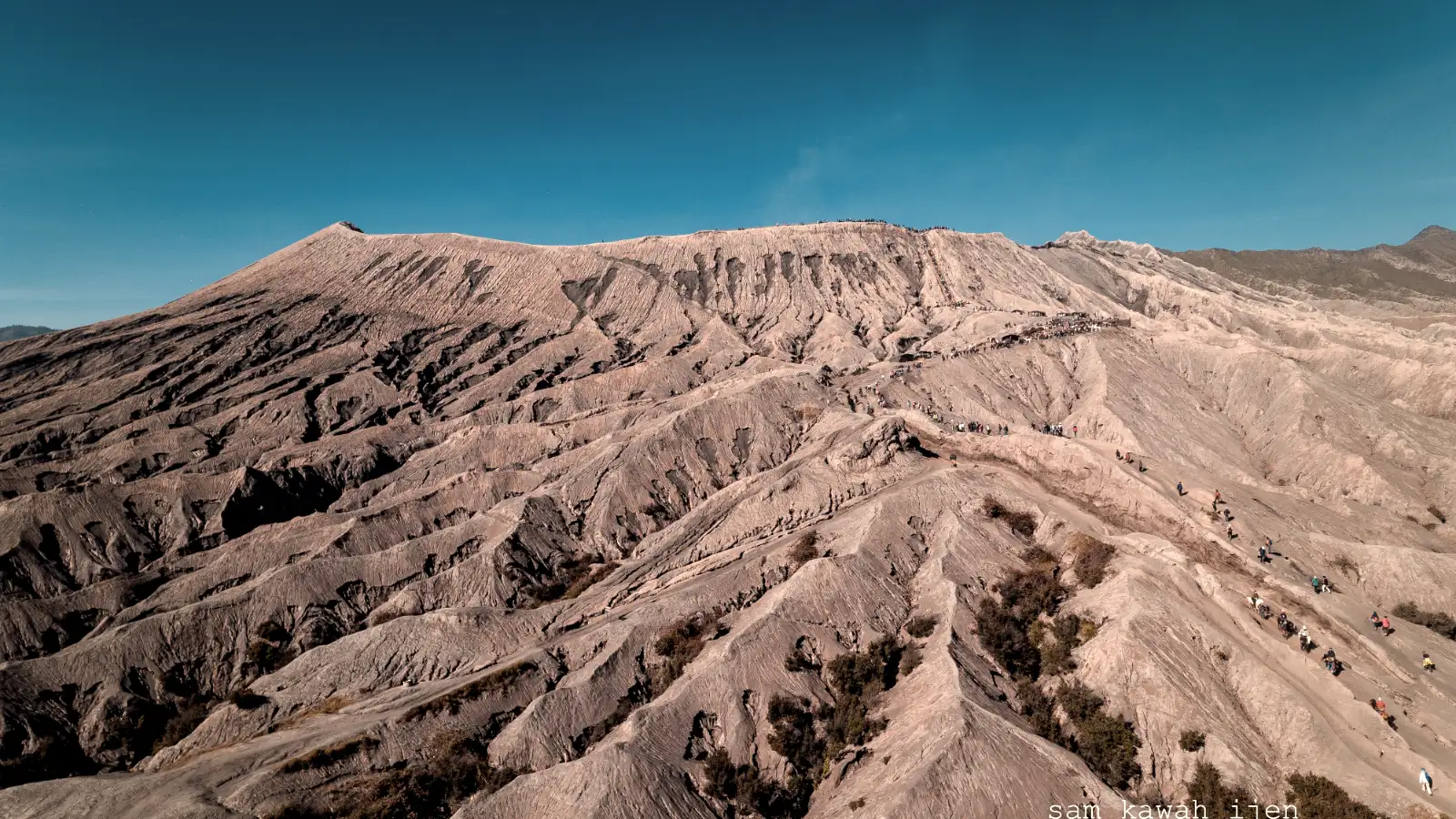
Mount Bromo’s Continuous Crater Evolution
Mount Bromo itself is not a dormant relic but a living, breathing geological engine.
Its crater is constantly emitting sulfurous smoke, a sign of the active magma chamber boiling just a few kilometers below.
Eruptions in recent decades have altered the height of the crater rim and the depth of the inner vent significantly.
Photographers often note how the textures of the crater walls change after every major tremor.
Steep, fluted ridges surround the active vent, created by the rapid cooling of ejected materials.
Knowing why travelers love this duo of Bromo and Ijen helps visitors appreciate the varied volcanic personalities of Java.
Seismic monitoring stations are scattered around the rim to track every minute movement of the earth.
Safety is paramount, and the Indonesian Center for Volcanology provides daily updates on the status of the Tengger complex.
Always consult with professional guides who understand these geological signals before heading to the rim.
Geological Impact on East Java
Volcanic ash from the Tengger Caldera is a double-edged sword for the local environment.
While eruptions can be destructive, the mineral-rich ash provides some of the most fertile soil on the planet.
Farmers in the surrounding highlands successfully grow vegetables and flowers that wouldn’t thrive elsewhere.
Water distribution is another fascinating aspect of the caldera’s geology.
The porous volcanic rock acts as a giant sponge, absorbing rainwater and releasing it slowly through springs at lower altitudes.
This natural irrigation system supports thousands of hectares of rice paddies in the lowlands.
Distance is often a factor for those exploring the region’s diverse peaks.
Understanding the Mount Bromo to Ijen distance is crucial for logistics and timing.
Each volcano in the chain contributes uniquely to the island’s hydrological and agricultural success.
How to Experience the Caldera Firsthand
Reaching the caldera floor usually involves a 4×4 Jeep ride from the village of Cemoro Lawang.
Descending from the lush rim into the barren sand sea is a transition that feels like entering another planet.
Most visitors start their day before dawn to catch the iconic light over the Bromo sunrise panorama.
Physical preparation is helpful, though the hike to the Bromo stairs is relatively short.
Dust can be a challenge in the Sea of Sand, so bringing a mask and goggles is often recommended by veterans.
Check the fitness requirements for Bromo to ensure you can enjoy the trek comfortably.
Extended stays allow for exploration beyond the main tourist path.
Hiking along the outer caldera rim offers perspectives that few day-trippers ever see.
Finding a comprehensive Java volcanic tour ensures you hit the best spots without missing the hidden geological gems.
Continue Your Adventure
The Tengger Caldera is just the beginning of East Java’s volcanic wonders. To truly master the landscape, consider expanding your itinerary with these high-intensity expeditions. Whether you are coming from the west or the east, these routes offer the most seamless experience:
- Bromo Ijen Tour from Surabaya (3D2N) – The classic route for business travelers and weekend warriors.
- Surabaya to Bali via Bromo & Ijen – The ultimate transit tour connecting Java’s city life with Bali’s beaches.
- Bromo Ijen Tour from Bali (3D2N) – Perfect for those wanting to escape the island for a raw volcanic fix.
- Yogyakarta to Bali Volcanic Traverse – A cultural and geological bridge across the heart of Java.
- Bromo, Ijen & Tumpak Sewu (4D3N) – The “Triple Threat” tour including Java’s most beautiful waterfall.
- Bromo, Ijen & Sukamade Adventure – Combine volcanoes with a rare turtle conservation experience.
Frequently Asked Questions
Is the Tengger Caldera safe to visit?
Yes, the area is safe as long as you follow official guidelines from the Volcanology Center. Tours are suspended only during periods of high volcanic alert, ensuring tour safety for all adventurers.
What is the best time of day to see the Sea of Sand?
Early morning, right after sunrise, is the most magical time. The low sun creates long shadows across the dunes, highlighting the textures of the volcanic ash.
Can I walk across the caldera or do I need a Jeep?
Walking is possible and provides a deep connection to the land, but it is time-consuming and dusty. Most travelers prefer a Jeep to reach the base of Bromo quickly before exploring on foot.
How high is the rim of the Tengger Caldera?
The outer rim, where the main viewpoints like Penanjakan are located, reaches altitudes of approximately 2,770 meters. This elevation offers the famous “bird’s-eye view” of the entire volcanic complex.
Are there any other volcanoes inside the caldera?
Besides Mount Bromo, there are four other peaks: Mount Batok, Mount Widodaren, Mount Watangan, and Mount Kursi. Mount Batok is particularly striking due to its dormant, perfectly conical shape covered in vegetation.
Ready to Witness Geological History?
Don’t just read about the Tengger Caldera—stand in the heart of it. Join our expert-led expeditions for an unforgettable journey through East Java’s volcanic soul.