Ijen Birding Hide: Seeing the Rare Grey Breasted Partridge in Java’s Hidden Forests
Hunting for elusive avian species in the dense undergrowth of East Java often feels like searching for a needle in a haystack. Most travelers arrive at the volcano focused entirely on the sulfur mines, completely missing the vibrant life echoing through the lower slopes. Therefore, if you are a wildlife photographer or a dedicated birder, you likely know the frustration of hearing a rare call only for the bird to vanish instantly.
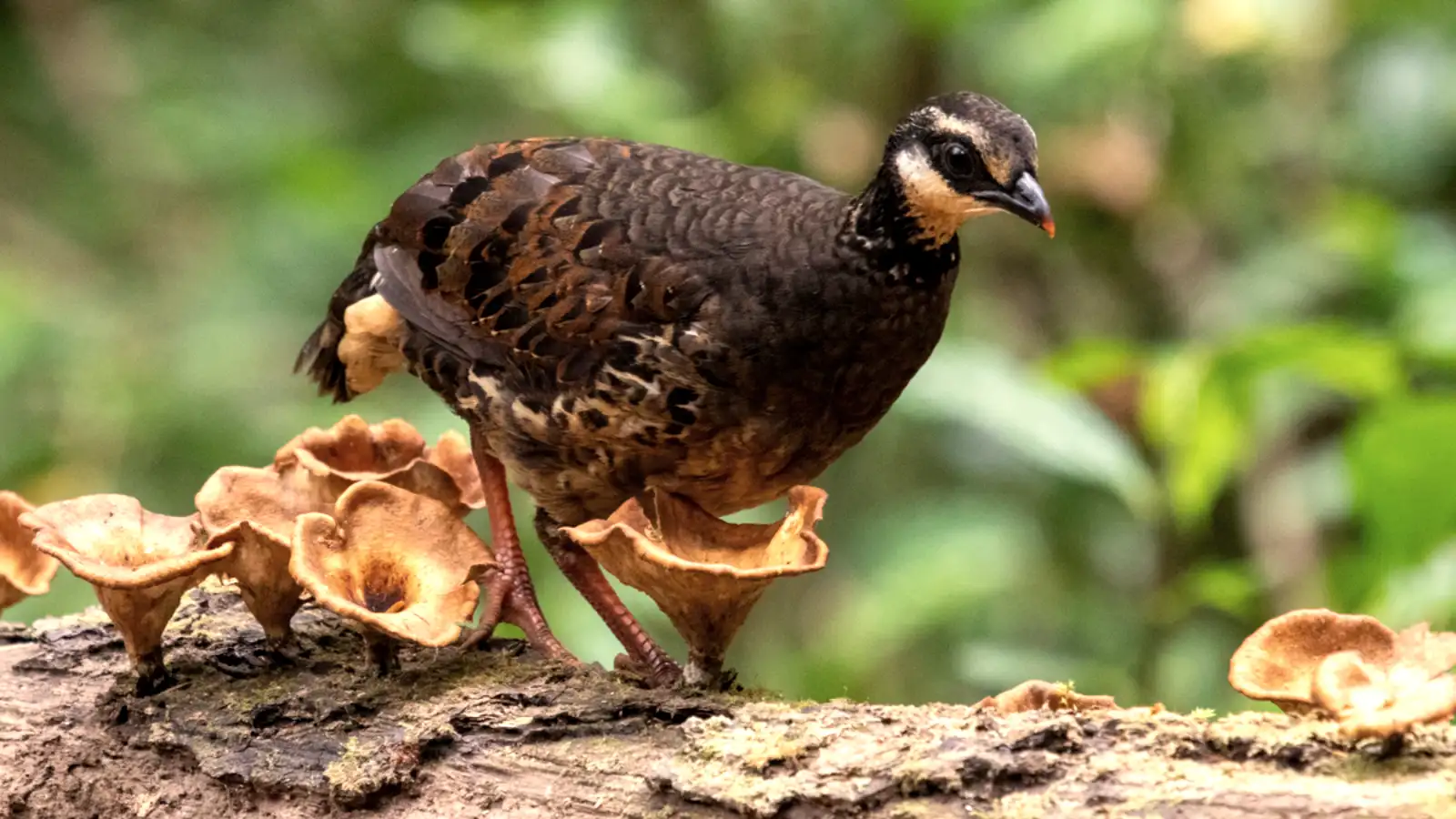
Specifically, the Grey-breasted Partridge remains one of the most difficult targets for those on foot because of its incredibly shy nature. Fortunately, the development of a professional Ijen birding hide has revolutionized how enthusiasts encounter these Javan endemics. Meanwhile, you can now enjoy an intimate viewing experience without disturbing the delicate balance of the montane ecosystem.
Ultimately, choosing to check current availability for a guided hide session ensures you don’t leave empty-handed. In this guide, we will explore why this specific location is the crown jewel of birdwatching in Indonesia.
What You Need to Know
Before you pack your telephoto lens, here are the essential facts for planning your visit to the bird hides.
- Primary Target: The endemic and elusive Grey-breasted Partridge (Arborophila orientalis).
- Best Timing: Early morning sessions from 05:30 AM are mandatory for peak activity.
- Location: Concealed forest patches on the lower slopes, away from the main tourist trail.
- Required Gear: A sturdy tripod and a lens with at least 400mm reach are recommended.
- Expert Assistance: It is highly advised to reserve your local guide who knows the daily bird movements.
In This Guide
The Advantage of Birding Hides
Key Target Species in Ijen
How the Experience Works
Advanced Photography Strategies
Seasonal Guide & Weather
Frequently Asked Questions
Why Trust This Guide
Our team consists of veteran naturalists who have spent years documenting the biodiversity of the Ijen UNESCO Global Geopark. We understand that birdwatching is more than just a hobby; it is a pursuit of patience and precision. Furthermore, we collaborate directly with local rangers to ensure our data reflects the most current bird sightings and trail conditions.
In addition, our commitment to ethical wildlife viewing means we prioritize the well-being of the species above all else. Because of this, we only recommend hides that follow strict non-intrusive protocols. Consequently, you can trust that your visit supports conservation efforts in East Java.
The Strategic Advantage of Using a Birding Hide
Entering the forest with a standard walking tour often results in seeing nothing but blurred wings. Birds in this region have evolved to be incredibly wary of human presence due to natural predators. Thus, a stationary hide acts as your invisibility cloak, allowing you to blend into the shadows effectively.
Inside the hide, your silhouette is broken up, and your movements are shielded from view. This setup encourages birds to enter their natural foraging state without the stress of being watched. Moreover, the proximity allowed by a hide often means you can capture details—like the glint in a pitta’s eye—that are impossible to get elsewhere.
Creating a Disturbance-Free Zone
Silence is the currency of a successful birding session in Ijen. Hides are strategically placed near known water sources or fruiting trees where birds naturally congregate. For instance, the Grey-breasted Partridge prefers damp, leaf-littered floors where it can scratch for insects in peace.
By remaining perfectly still, you become a part of the landscape. Eventually, the forest residents stop seeing the structure as a threat. As a result, you might witness rare behaviors such as courtship displays or family group social interactions.
Optimized Lighting for Photographers
Photographers often struggle with the harsh, dappled light of the tropical canopy. However, professional hides are oriented to take advantage of the “golden hour” lighting. Specifically, the windows are angled to ensure that subjects walking into the clearing are illuminated by soft, directional light.
This careful planning eliminates the need for flash, which is strictly prohibited in these sensitive areas. Additionally, the perches and clearings are maintained to provide clean backgrounds. Specifically, this results in professional-grade images that look like they belong in a wildlife magazine.
Key Target Species of the Ijen Montane Forest
The biodiversity around the Ijen crater is staggering, featuring a mix of high-altitude specialists and Javan endemics. While the partridge is the star, the supporting cast is equally impressive. Below is a breakdown of the species you are likely to encounter during a session.
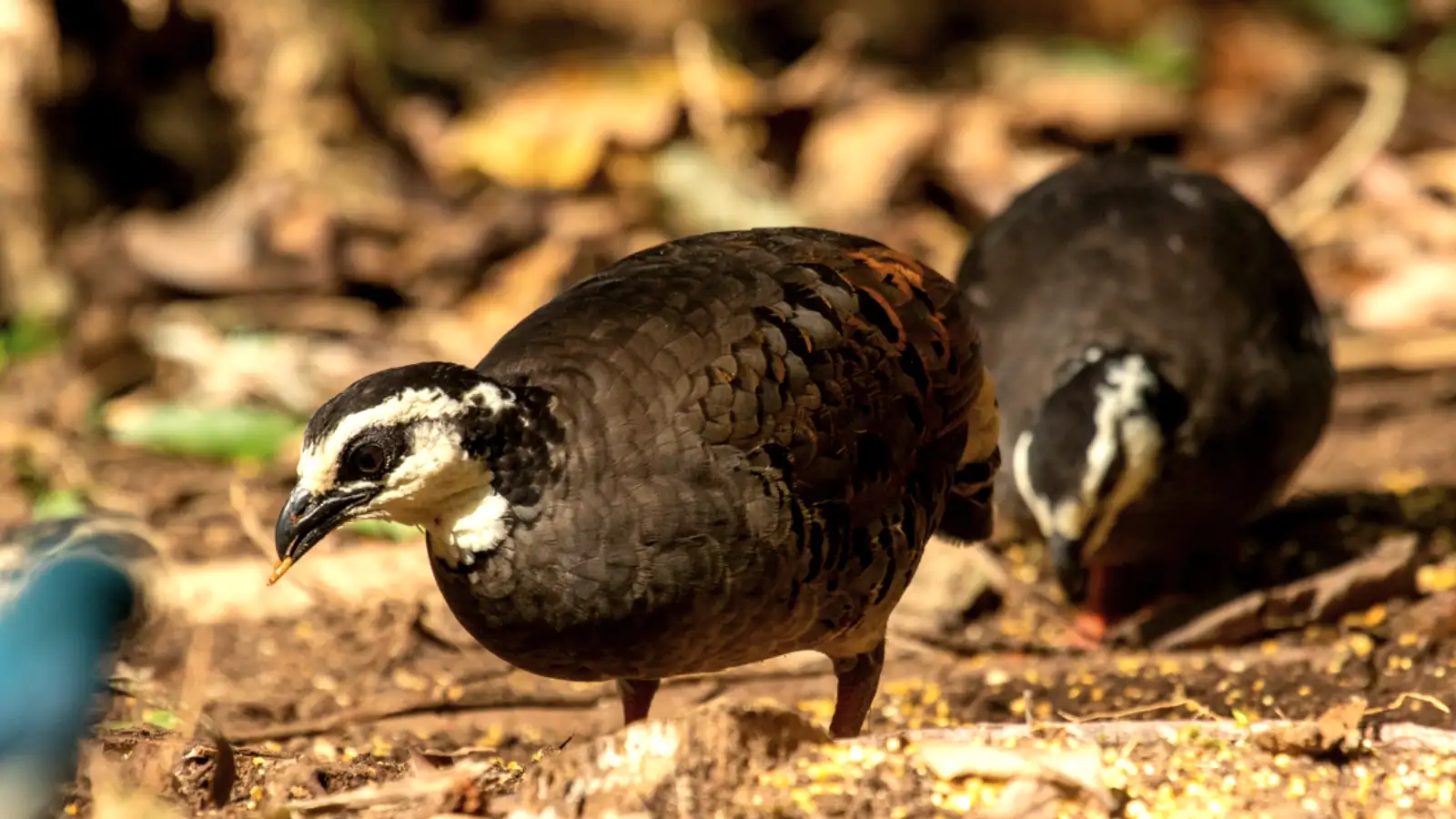
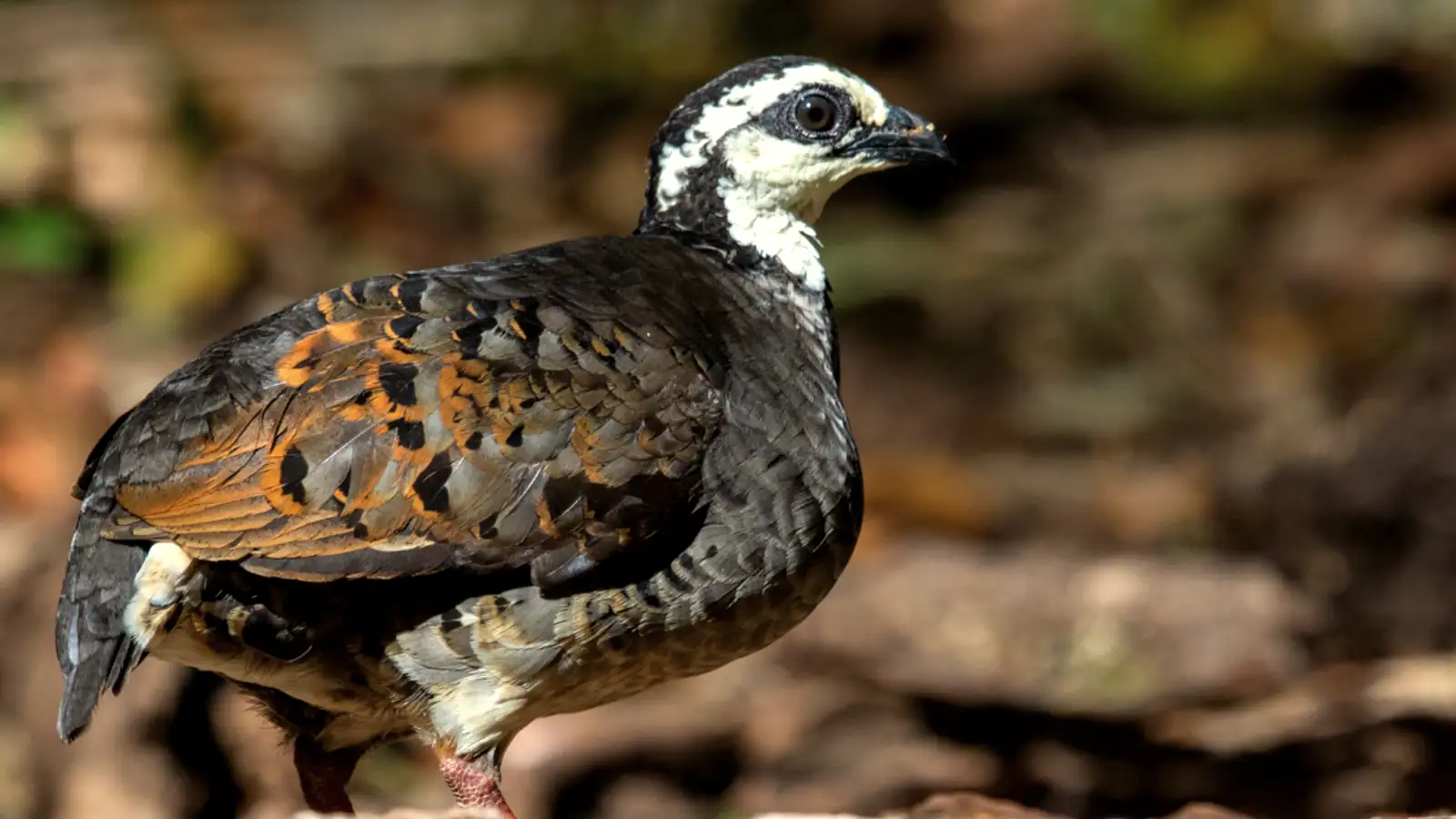
1. Grey-breasted Partridge (Arborophila orientalis)
This species is the primary motivation for most birders visiting the Ijen birding hide. Also known as the White-faced Partridge, it is notoriously secretive and rarely leaves the safety of deep cover. From the hide, you get the rare chance to watch them methodically sift through the soil.
Observation typically begins with hearing their low, rhythmic calls echoing from the gullies. Soon, a family group might emerge, moving with surprising grace across the forest floor. Remember to keep your movements slow, as even a small twitch can send them scurrying back into the ferns.
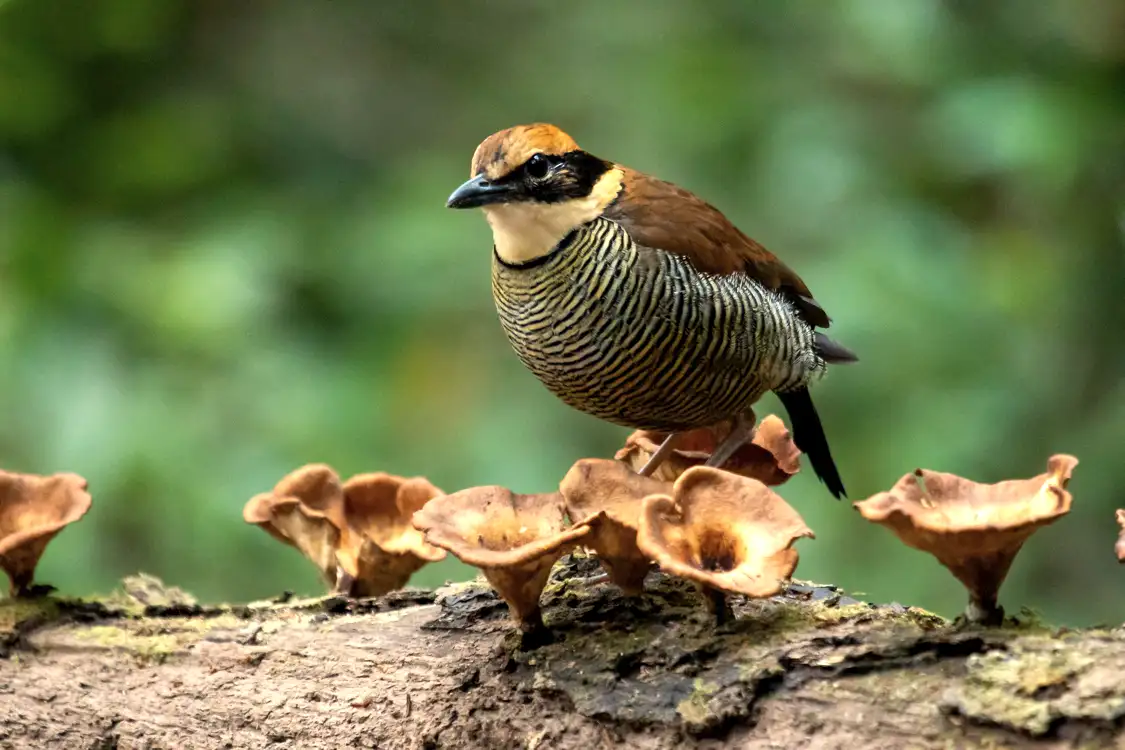
2. Javan Banded Pitta (Hydrornis guajanus)
Every birder dreams of seeing a pitta, and the Javan Banded variety is truly spectacular. Its plumage features electric blue, deep orange, and striking yellow bars that pop against the dark earth. For instance, seeing one hop onto a mossy log is a moment you won’t soon forget.
They are ground-dwellers by nature, often following a predictable path through the forest. Interestingly, they are most active just as the sun begins to pierce the lower canopy. Consequently, having your camera settings pre-configured for low light is essential for success.
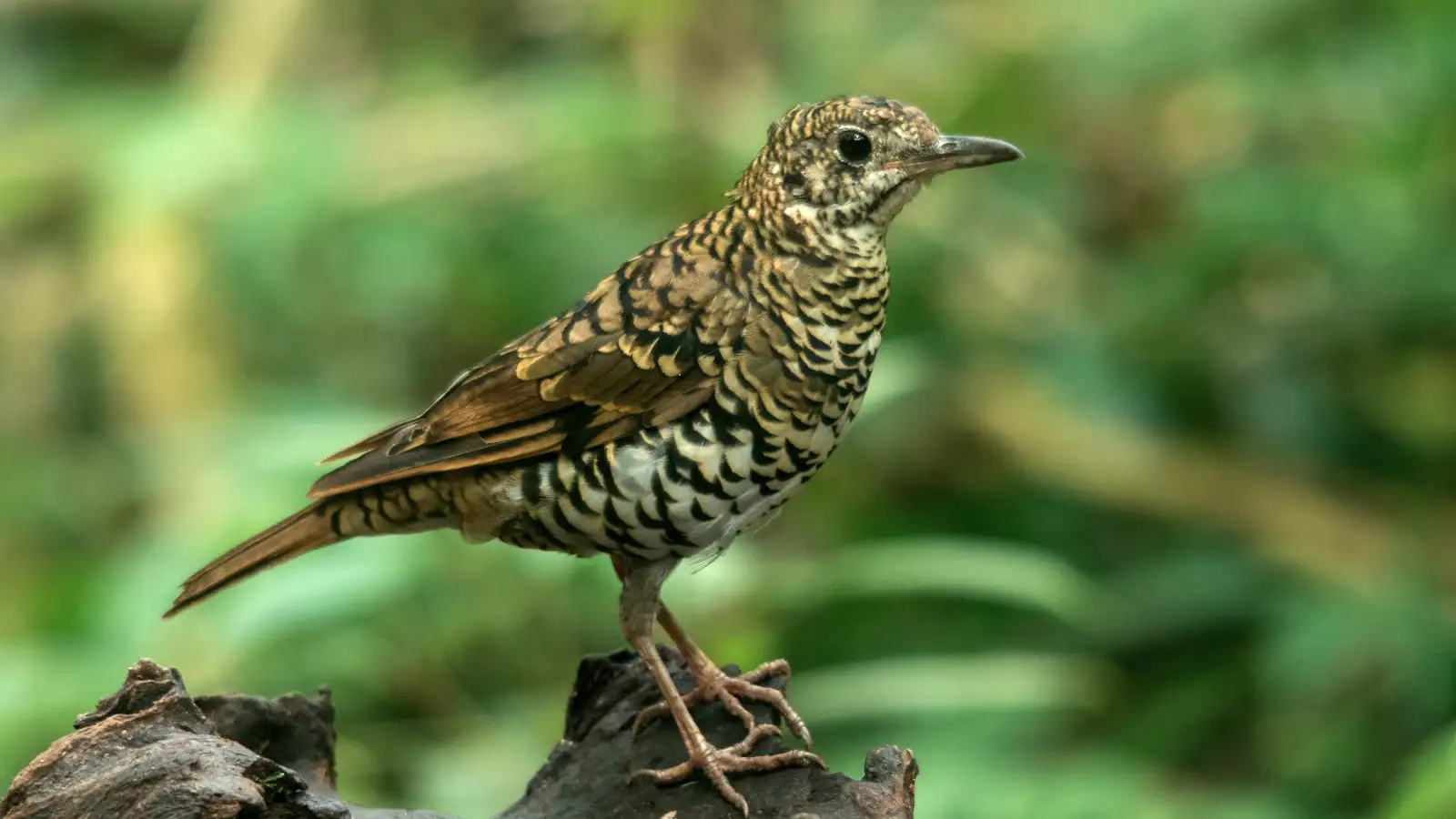
3. Scaly Thrush (Zoothera dauma)
Mastering the art of camouflage, the Scaly Thrush is a marvel of evolutionary design. Its feathers resemble the intricate patterns of a reptile, allowing it to vanish against a backdrop of decaying leaves. Despite its subtle colors, it is a favorite for those who appreciate the fine details of avian anatomy.
It moves in short, sudden bursts before freezing to scan for danger. Because of its stillness, it provides an excellent subject for long-exposure shots in the dim forest light. Always look for its golden-brown spangles as it pauses in the shadows.
4. The Thrush and Flycatcher Collective
In addition to the ground birds, the middle canopy around the hide is usually teeming with activity. The Javan Whistling Thrush is easily identified by its deep blue-purple sheen, often appearing near stream beds. Meanwhile, its larger cousin, the Blue Whistling Thrush, is bolder and easily recognized by its bright yellow bill.
Smaller birds like the Snowy-browed Flycatcher provide a contrast with their frantic energy. This tiny bird features a bold white eyebrow and a rufous chest, flitting from branch to branch at eye level. Furthermore, you might even see the Red Junglefowl, the wild ancestor of our domestic chickens, strutting through the clearing.
🔥 Featured Expedition
Combine your love for rare wildlife with the stunning volcanic landscapes of East Java. Our expert-led tours offer the perfect balance of adventure and specialized birdwatching sessions.
How the Birding Hide Experience Works
Planning a session requires more than just showing up at the forest edge. Because the birds follow strict routine patterns, your timing must be impeccable. Usually, your guide will pick you up from your accommodation while it is still dark to ensure you are settled before sunrise.
Walking to the hide is done in near-silence to avoid alerting the local wildlife. Once inside, you will arrange your equipment on provided ledges or tripod mounts. Subsequently, the waiting game begins, often accompanied by the waking sounds of the tropical forest.
Timing and Light Management
Morning sessions are undoubtedly the most productive for photography. Most birds begin foraging immediately after the first light hits the canopy. Specifically, the window between 05:30 AM and 09:30 AM offers the best balance of bird activity and soft, workable light.
Afternoon sessions are also an option, usually starting around 02:00 PM. While the light is different, certain species like the partridge may reappear for a final feeding before dusk. Therefore, dedicated photographers often choose to view our comprehensive package that includes both time windows.
What to Expect Inside the Hide
Space is often limited to maintain a low profile, so expect a cozy environment. Hides are usually equipped with simple benches and small viewing ports at varying heights. Interestingly, the temperature inside the forest remains cool, so wearing layers is a smart move.
You should bring plenty of water and silent snacks (avoid crinkly plastic bags). Moreover, ensure your phone is on silent and your camera’s “beeps” are disabled. Ultimately, the goal is to become an invisible observer in a vibrant, living world.
Advanced Photography Strategies for the Hide
Capturing the perfect shot of a Grey-breasted Partridge requires more than just a good camera. Because the forest floor is often dark, you will need to push your equipment to its limits. Here are some professional tips to ensure your portfolio stands out.
1. Switch to Silent Shutter
Modern mirrorless cameras have a distinct advantage in this environment. The “clack” of a mechanical shutter can startle a skittish partridge, especially if it is their first time approaching the hide that day. Consequently, using an electronic or silent shutter is a game-changer for capturing natural behavior.
If you are using a DSLR, try to use “Quiet Mode” or time your shots carefully. For instance, wait until the bird is focused on scratching for food before pressing the shutter. This small adjustment can be the difference between a full series and a shot of a disappearing tail.
2. Master Your Depth of Field
Focusing in a cluttered forest environment is a significant challenge. You want the bird to stand out sharply while the foreground and background remain softly blurred. Generally, shooting at a wide aperture like f/4 or f/5.6 is ideal for creating that professional separation.
However, be careful with extremely shallow depth of field when photographing larger birds like the Junglefowl. You want to ensure the entire head and body are in focus. Meanwhile, always prioritize eye-focus to create a powerful connection with the viewer.
3. Manage Your ISO and Shutter Speed
Light levels under the canopy can be deceptively low, even on sunny days. Do not be afraid to raise your ISO to 1600 or 3200 to maintain a fast enough shutter speed. Specifically, you want to stay above 1/250th of a second to freeze the slight movements of the birds.
In addition, consider using a monopod or tripod even if your lens has stabilization. This allows you to stay in position for hours without fatigue. Finally, it’s a good idea to book your local guide who can help position your gear for the best angles.
Best Time to Visit: Weather and Seasons
The success of your birding trip depends heavily on the East Javanese climate. While birds are present year-round, their activity levels change with the rainfall. Understanding these patterns will help you choose the ideal window for your expedition.
| Season | Months | Bird Activity | Photography Conditions |
|---|---|---|---|
| Dry Season | May – October | High (Peak Breeding) | Excellent light, dry trails |
| Shoulder Season | April & November | Moderate | Changeable weather, fewer crowds |
| Wet Season | Dec – March | Low to Moderate | Challenging light, lush greens |
Dry months are generally preferred because forest access is much easier and safer. During this time, water sources are more limited, which naturally draws birds to the specific spots near the hides. Furthermore, the light is more predictable, allowing for cleaner shots throughout the morning.
Conversely, the wet season offers incredibly lush, green backdrops that can look stunning in photos. However, the risk of equipment damage from rain is higher, and birds may be less active during downpours. Regardless of the month, always check the best time to visit Ijen crater to align your birding with other activities.
Logistics: How to Reach the Ijen Birding Hides
Most travelers approach Ijen from either Bali or Surabaya. If you are coming from the west, taking a train to Banyuwangi is the most efficient and scenic route. Once in Banyuwangi, you are just a short drive from the base of the mountain.
From Bali, the journey involves a ferry crossing at Gilimanuk followed by a drive to the Licin or Tamansari area. Many luxury travelers choose to stay in boutique villas nearby to minimize the early morning commute. In contrast, backpackers often find affordable homestays that are equally welcoming.
Where to Stay for Birders
Staying close to the forest edge is a massive advantage for birding. It allows you to sleep slightly longer and be the first person in the hide. Specifically, look for accommodations that offer “breakfast to go” for those early morning departures.
Many of these lodges are nestled in coffee plantations, which are birding hotspots themselves. You can often see sunbirds and flowerpeckers right from your balcony. For more details on the area, check our ijen crater travel guide for lodging recommendations.
Essential Packing List
Do not underestimate the cool temperatures of the Javanese highlands. Even though it is a tropical island, the early mornings can be quite chilly. We recommend wearing dark, neutral colors like olive green or brown to help you blend into the hide’s interior.
In addition, sturdy hiking boots are necessary for the trek from the car to the hide location. Mosquito repellent is also a must, as the damp forest floor is a prime breeding ground for insects. Finally, don’t forget to pack mandatory equipment if you plan on trekking to the crater rim later in the day.
Continue Your Adventure
While the birding hide is a highlight, East Java offers so many more incredible experiences. You might want to consider the 3-day Bromo Ijen tour from Bali to see the sunrise over the Sea of Sand. For those interested in diverse wildlife, the Baluran National Park safari features green peafowl and wild water buffalo. If you enjoy dramatic landscapes, the Tumpak Sewu waterfall trek is an unforgettable addition to any itinerary. Alternatively, look into the Sukamade turtle conservation tour for a different kind of animal encounter. Finally, a direct Ijen tour from Surabaya is perfect for those on a tight schedule.
Frequently Asked Questions
Q: How many people can fit in the Ijen birding hide at once?
A: Typically, the hides are designed for 2 to 3 photographers to ensure maximum comfort and silence. It is best to see pricing details for private sessions if you have a larger group.
Q: Are there bathrooms available at the hide site?
A: No, these are remote forest hides with no facilities. It is recommended to use the restroom at your lodge before the 05:00 AM departure.
Q: Is it guaranteed that I will see the Grey-breasted Partridge?
A: While sightings are very frequent (around 80-90%), nature is unpredictable. Using a professional hide significantly increases your odds compared to any other method.
Q: Can I use flash photography inside the hide?
A: Absolutely not. Flash can severely traumatize the birds and cause them to abandon the area for days. Use a high ISO and a tripod instead.
Q: Do I need to be an expert birder to enjoy this?
A: Not at all. Many travelers visit for the sheer beauty of the forest and the thrill of seeing rare animals up close. It is a peaceful, meditative experience for anyone.
Ready for Your Ijen Birding Adventure?
Every moment spent in the Ijen birding hide is a masterclass in the beauty of the Javanese forest. Whether you are aiming for that award-winning shot of a partridge or simply want to escape the crowds, this experience delivers. Furthermore, the thrill of seeing a species that few people on earth have ever witnessed is truly priceless.
Don’t leave your wildlife encounters to chance. Instead, trust the experts who know these woods like the back of their hand. Because these sessions are limited to a small number of people, they fill up quickly during the peak dry season.
Ultimately, your journey to see the Grey-breasted Partridge starts with a single click. Take the first step toward your dream birding trip today. We look forward to showing you the hidden wonders of East Java!
Book Your Ijen Birding Experience
Spaces in our professional birding hides are extremely limited to ensure a quiet, high-quality experience. Secure your date now to witness Java’s most elusive species.