Mount Ijen: 2026 Eruption History & Active Volcano Facts
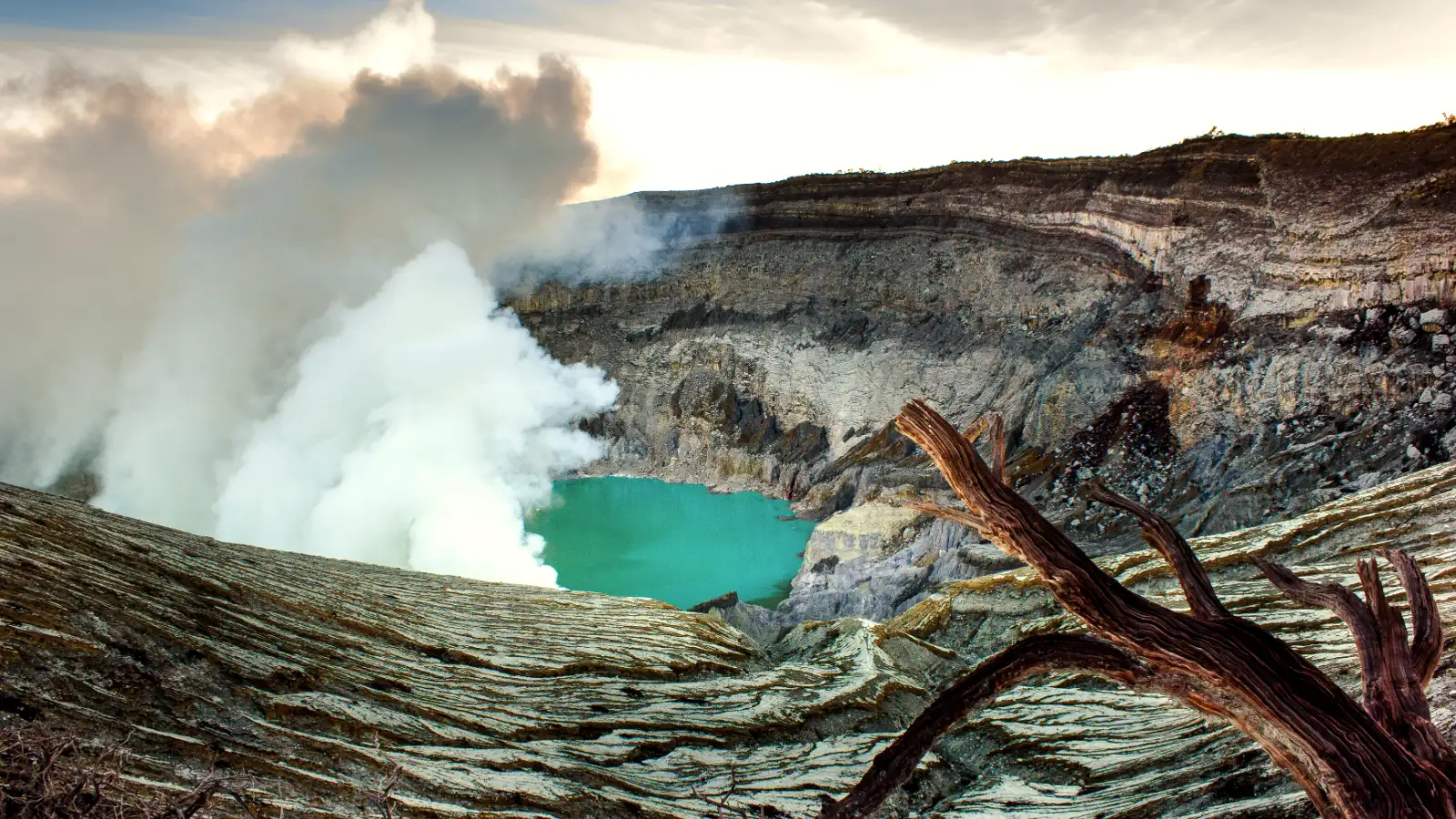
Waking up at midnight to climb a steep, freezing volcano might sound like a traveler’s nightmare. However, the reward waiting at the summit of Kawah Ijen is a spectacle unlike anything else on Earth. Specifically, most adventurers struggle with complex logistics, unpredictable weather, and the daunting physical challenge of the ascent.
Ultimately, our comprehensive guide provides the clarity you need to conquer this active stratovolcano with confidence. Therefore, if you are ready to witness the electric-blue flames and the world’s largest acidic crater lake, securing a professional tour package is your first step toward a safe and seamless expedition.
Furthermore, understanding the geological power of the Sunda Arc is essential for every visitor. This Ijen Crater travel guide offers deep insights into the volcano’s history and current activity. Consequently, you can plan your trip with the expertise of seasoned travel journalists and local volcanologists.
What You Need to Know
💡 Status: Mount Ijen is an active volcano with frequent solfatara activity and occasional phreatic eruptions.
💡 Key Features: Home to the rare blue fire phenomenon and a highly acidic turquoise lake with a pH near zero.
💡 Location: Situated on the border between Banyuwangi and Bondowoso in East Java, Indonesia.
💡 Safety: Gas masks are mandatory due to high concentrations of sulfur dioxide gas near the crater floor.
In This Guide
1. Geologic Power: The Active Nature of Ijen
2. A Chronology of Eruptions: Historical Context
3. The Chemical Marvel: Blue Fire and Acid Lakes
4. Essential Logistics for Modern Travelers
5. Author Expertise and Safety Standards
Geologic Power: The Active Nature of Ijen
Mount Ijen stands as a testament to the immense power of the Earth’s tectonic plates. Specifically, it is part of the Ijen Caldera complex, a massive volcanic system spanning nearly 20 kilometers in width. Moreover, the volcano is fueled by the subduction of the Indo-Australian plate beneath the Eurasian plate.
Therefore, the magma chamber beneath the crater remains highly active and pressurized. This pressure frequently results in solfatara activity, where volcanic gases escape through vents on the crater floor. Consequently, these vents create the intense heat required to ignite sulfur gases into the famous blue flames.
Understanding the Magmatic System
Meanwhile, the plumbing system of Ijen is incredibly complex compared to other Indonesian volcanoes. Scientists monitor the seismic activity constantly to detect any movement of magma toward the surface. In addition, the interaction between the magma and the overlying acidic lake creates a unique hydrothermal environment.
For instance, the lake acts as a massive “lid” that traps gas pressure until it reaches a breaking point. As a result, sudden phreatic eruptions can occur without significant warning from traditional seismic sensors. Furthermore, the Ijen UNESCO Global Geopark status highlights its global importance in Earth sciences.
The Role of Solfatara Activity
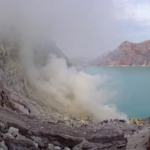
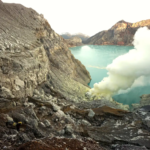
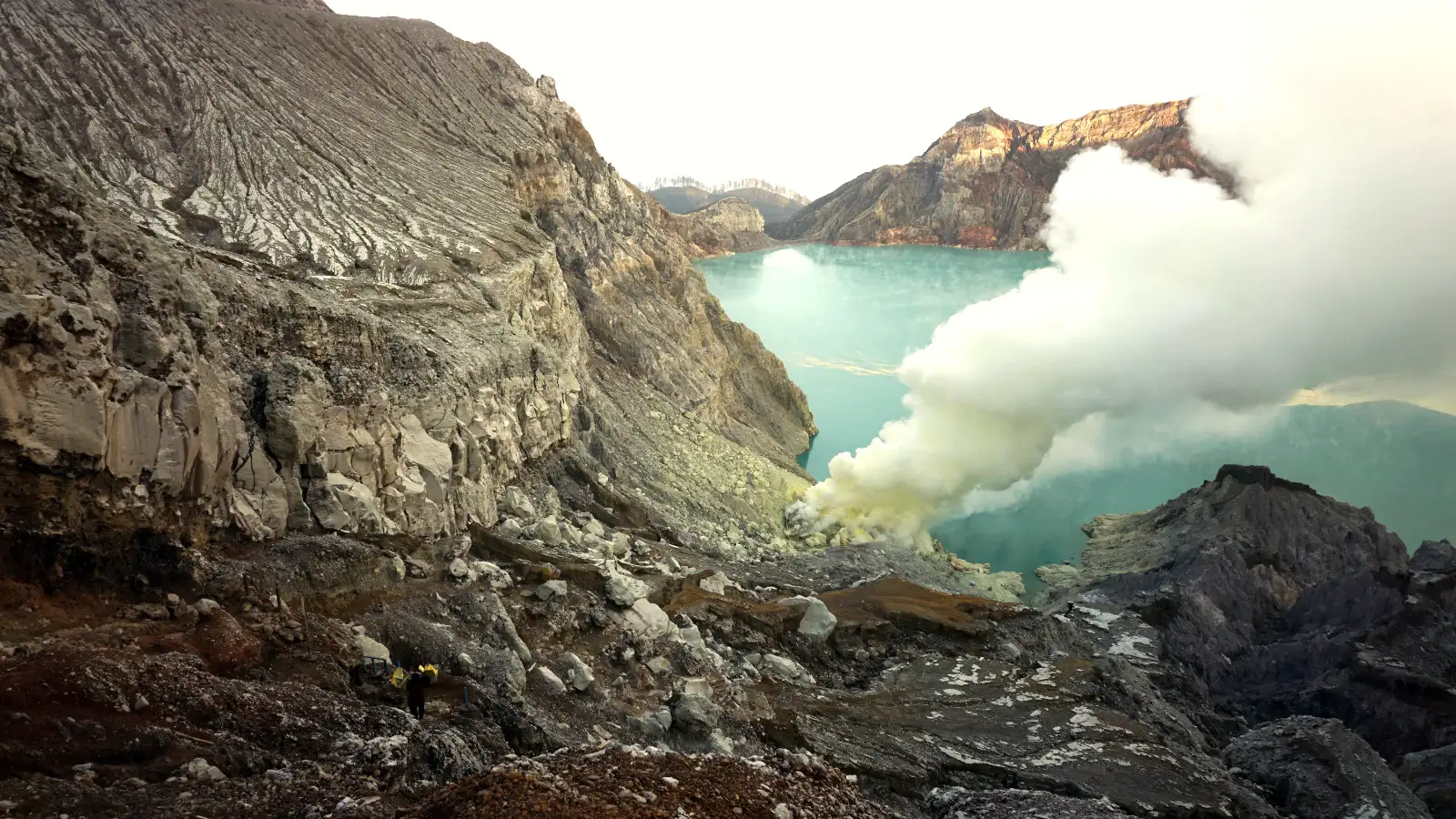
Specifically, the solfatara fields at Ijen are some of the most productive in the world. They continuously deposit high-purity sulfur, which has been harvested by locals for decades. However, the high concentrations of hydrogen sulfide and sulfur dioxide make this environment extremely hazardous for the unprotected.
Moreover, the temperature of these gases can exceed 600 degrees Celsius at the vent source. Consequently, the visual beauty of the crater hides a volatile chemical laboratory that is constantly evolving. Therefore, understanding these risks is the first step toward a responsible and safe visit to the summit.
A Chronology of Eruptions: Historical Context
Mount Ijen has a long and documented history of volcanic activity that dates back centuries. For instance, the first recorded major eruption occurred in 1796, marking the beginning of modern observations. Historically, these events have ranged from mild gas emissions to devastating phreatic explosions that reshaped the crater.
Moreover, the eruption of 1817 was particularly significant due to its impact on the surrounding landscape. Specifically, the discharge of acidic water from the crater lake caused massive lahars that flooded downstream areas. Consequently, local communities have developed a deep respect for the volcano’s unpredictable temper over the generations.
Modern Volcanic Events
In addition, more recent history shows that Ijen remains a potent threat to the region. For example, a significant phreatic event occurred in 2018, leading to the temporary closure of the park. During this event, toxic gas clouds were released, necessitating the evacuation of nearby residents and tourists alike.
Furthermore, these smaller-scale events occur more frequently than the major magmatic eruptions of the past. Meanwhile, volcanologists use these occurrences to refine their prediction models for future activity. Therefore, staying informed through official channels is paramount for anyone planning a trek to the crater rim.
| Significant Year | Eruption Type | Primary Impact |
|---|---|---|
| 1796 | Magmatic | First recorded historical eruption |
| 1817 | Phreatic/Lahar | Massive downstream flooding |
| 1936 | Gas Emission | Increased solfatara activity |
| 2018 | Phreatic Burst | Release of toxic gas clouds |
The Evolution of Monitoring
Consequently, the monitoring equipment at Mount Ijen has become world-class in its sophistication. Specifically, local authorities now use real-time gas sensors and satellite imagery to track thermal anomalies. In addition, seismic stations around the caldera provide constant data to the Volcanology and Geological Hazard Mitigation Center.
As a result, the risk to tourists is significantly minimized through proactive park management. However, the nature of a stratovolcano means that risks can never be entirely eliminated. Therefore, travelers should always heed the advice of their local mountain guides who understand the mountain’s subtle shifts.
🔥 Featured Expedition
Join the most trusted volcanic adventure in East Java and witness the sunrise of a lifetime. Our expert teams ensure your safety with professional gear and deep local knowledge.
The Chemical Marvel: Blue Fire and Acid Lakes
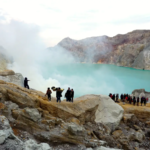
Moreover, the chemical composition of Kawah Ijen makes it a unique destination for scientific study. Specifically, the crater holds approximately 36 million cubic meters of acidic water. Consequently, the lake is classified as the largest highly acidic lake in the world, with a pH level often lower than battery acid.
Furthermore, this acidity is caused by the dissolution of volcanic gases like hydrogen chloride and sulfur dioxide into the water. Therefore, the water appears as a vibrant turquoise, but it is extremely corrosive to metals and organic tissue. In addition, the interaction between this acid and the surrounding rock produces unique mineral formations.
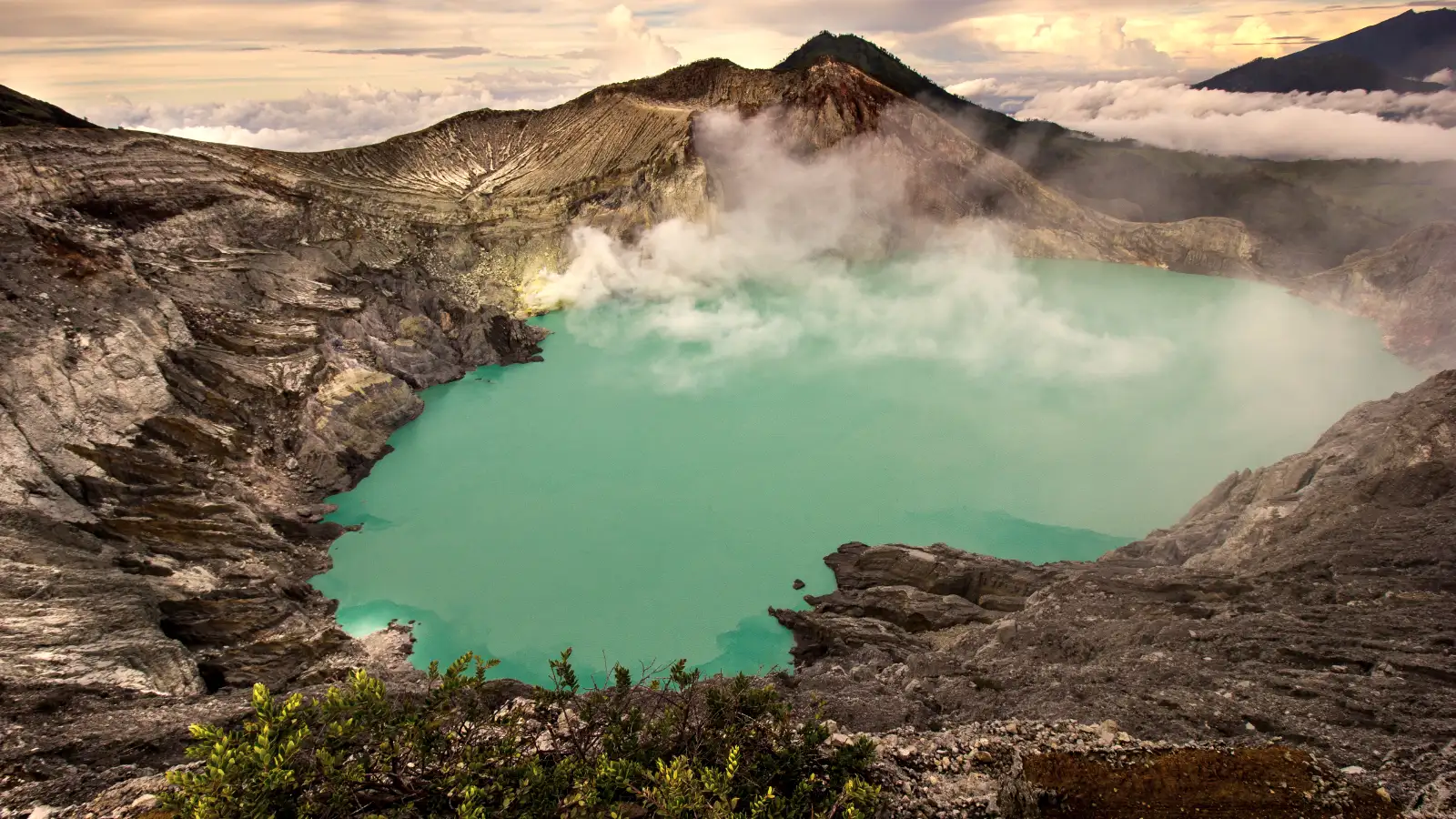
Important Update: The appearance of the Blue Fire at Ijen Crater is highly unpredictable. It depends heavily on daily volcanic activity, gas density, and weather conditions. It is sometimes clearly visible, and sometimes not visible at all. To avoid disappointment, please contact us via WhatsApp to check the latest daily updates before you hike.
The Science of the Blue Flame
Meanwhile, the blue fire is not actually “lava” as many tourists mistakenly believe. Specifically, it is the combustion of sulfuric gases that emerge from volcanic cracks at high pressure. As a result, when these gases meet the oxygen-rich air, they ignite into brilliant blue flames that can reach five meters in height.
Historically, this phenomenon was only known to the sulfur miners who worked the night shifts. However, word quickly spread among international travelers, making it a bucket-list experience for backpackers. Consequently, the crater has become one of the few places on the planet where this can be observed regularly.
Acidic Water and the Environment
Furthermore, the environmental impact of the acidic lake extends far beyond the crater rim. Specifically, the acidic water seeps into the local river systems, creating a naturally “sour” river known as the Banyupahit. Moreover, farmers downstream must carefully manage their irrigation to avoid damaging their crops with the acidic runoff.
Ultimately, this creates a delicate balance between the destructive power of the volcano and the life it supports. In addition, the unique minerals found here are of great interest to geologists worldwide. Therefore, visiting Ijen is not just a hike; it is a journey into the heart of a living chemical factory.
Essential Logistics for Modern Travelers
Planning a trip to Mount Ijen requires meticulous attention to detail and timing. Specifically, the base camp at Paltuding is the starting point for the 3-kilometer trek to the summit. Moreover, most travelers choose to stay in Banyuwangi accommodations to minimize the midnight commute.
Consequently, the current entrance fee for international visitors is roughly 100,000 IDR on weekdays and 150,000 IDR on weekends. However, these prices are subject to change based on local government regulations. Therefore, checking the latest rates before you arrive is always a smart move for budget-conscious backpackers.
Gear and Equipment Requirements
In addition, having the right equipment is non-negotiable for a safe and comfortable experience. Specifically, a high-quality respirator mask with a sulfur filter is essential if you plan to descend into the crater. Furthermore, the temperature at the summit can drop below 5 degrees Celsius, requiring layered clothing.
Meanwhile, sturdy hiking boots with good grip are necessary to navigate the steep and dusty trails. As a result, many travelers opt for renting equipment locally if they are traveling light. Ultimately, being prepared allows you to focus on the beauty of the landscape rather than physical discomfort.
Choosing Your Route
Furthermore, there are different ways to experience the volcano depending on your fitness level and budget. For instance, luxury travelers might prefer a private Ijen tour from Bali that includes all transportation and premium lodging. Specifically, these packages handle the ferry crossing and long drives through the Javanese countryside.
Conversely, backpackers often prefer a sharing tour from Banyuwangi to save on costs while meeting fellow adventurers. Moreover, those who find the hike too strenuous can hire local “trolley” services to assist them up the steep slopes. Consequently, Mount Ijen has become accessible to a wider range of travelers than ever before.
Why Trust This Guide
Our team consists of veteran travel journalists and local East Java experts with decades of combined experience on these slopes. Specifically, we have witnessed the volcano through its many cycles of activity and rest. Consequently, our advice is rooted in real-world observations and official geological data from the Indonesian authorities.
Furthermore, we prioritize the safety and education of every traveler above all else. Moreover, we maintain close relationships with the local sulfur miners and park rangers to provide the most current information available. Therefore, you can trust our recommendations as the gold standard for exploring the Ijen Caldera responsibly.
Frequently Asked Questions (FAQ)
Q: Is it safe to visit Mount Ijen right now?
A: Yes, it is generally safe provided you follow the official alerts and use a professional guide. The volcano is constantly monitored for gas levels and seismic activity.
Q: What is the best time of year to visit?
A: The dry season (April to October) offers the clearest skies and safest hiking conditions. During the rainy season, trails can be slippery and visibility inside the crater is often limited.
Q: Can children or elderly people do the hike?
A: The hike is moderately difficult but accessible for those with average fitness. For those who cannot walk the entire distance, local trolley services are available for hire.
Q: Do I really need a gas mask?
A: Absolutely. The sulfur dioxide gas near the crater can be suffocating and harmful to your lungs. Professional masks are mandatory for anyone descending toward the lake.
Q: How long does the entire trek take?
A: The ascent usually takes 1.5 to 2 hours, while the descent into the crater takes another 30 to 45 minutes. Total trekking time is typically around 4 to 5 hours.
Continue Your Adventure
The wonders of East Java extend far beyond the turquoise sulfur mines of Ijen. For instance, many travelers find that combining this trek with a Mount Bromo sunrise tour provides the ultimate volcanic experience. Specifically, you can see the contrasting landscapes of the vast Sea of Sand after the intense chemistry of the Ijen crater.
Furthermore, if you are looking for a complete package, our Bromo Ijen combination tour is the most popular choice for international visitors. Moreover, you can explore the hidden gems of the region, such as the Tumpak Sewu Waterfall, to round out your adventure. Ultimately, booking your tour with us ensures you don’t miss a single highlight of this magnificent island.
Ready to Explore Mount Ijen?
Don’t leave your Indonesian adventure to chance. Let our expert guides lead you to the heart of the blue fire and the turquoise lake safely and professionally.
WhatsApp: +62 857 4871 1646 Email:ijenexpeditiontourandtravel@gmail.com